Portuguese Water Dog
Breed Guide
Bright, biddable, athletic, and built for water work, the Portuguese Water Dog is a true maritime utility breed. Its strong handler focus, confidence in motion, and attraction to water can all matter when a dog slips away.
5 min read · Practical pet-owner education with recovery-focused guidance
Overview
The Portuguese Water Dog is one of the clearest examples of a breed shaped by real-world utility rather than appearance alone. Often called the Cão de Água in Portugal, this rugged, medium-sized working dog spent centuries as an indispensable partner to Atlantic fishermen—swimming lines to shore, helping manage nets, retrieving gear, and moving confidently between boat, dock, and open water.
Modern Porties still carry that blueprint. They are bright, athletic, people-focused, and unusually purposeful. They often combine the eagerness of a sporting dog with the resilience and problem-solving instincts of a true maritime utility breed. This is part of why they can feel like a “thinking person’s dog”: if they are not given structure, they often invent their own work.
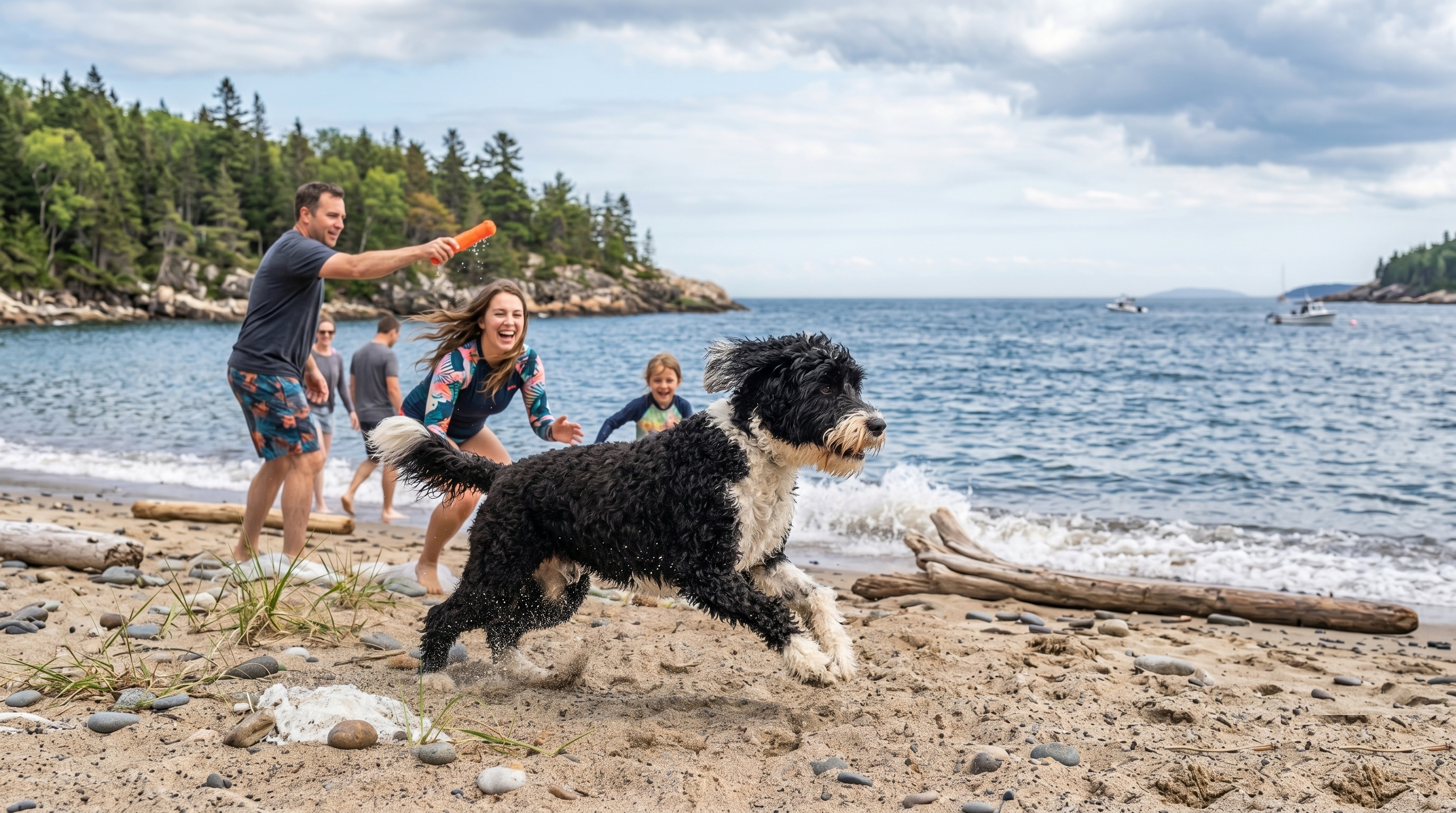
For TailTracker, the breed matters because its lost-dog behavior is often shaped by movement confidence, strong owner bonding, and very high environmental competence—especially near water, docks, trails, and open travel corridors. A loose Portuguese Water Dog may stay highly functional on the move rather than freezing close to the point of loss.
Physical Characteristics
The Portuguese Water Dog should look strong, balanced, muscular, and slightly longer than tall. It is a robust working athlete rather than a fine-boned show silhouette. The breed standard describes a dog built for sustained effort, with solid bone, a deep body, strong rear drive, and feet well suited to swimming.
The breed’s water engineering is one of its defining features. Porties have distinct webbing between the toes that acts like built-in paddling support, and the tail is thick at the base and powerful enough to function as a rudder while swimming. Those traits help explain the breed’s agility in choppy water and its confidence around docks, shorelines, and boats.
Coats may be curly or wavy and are single-coated rather than double-coated. Colors include black, brown, and combinations of black-and-white or brown-and-white. Coat texture and density matter because this breed was shaped for repeated work in wet conditions, not just appearance in the ring.
The traditional lion clip was originally functional, not decorative. Leaving more coat over the chest helped protect vital organs and core warmth in cold water, while trimming the hindquarters improved freedom of movement during swimming.
Personality & Temperament
Portuguese Water Dogs are typically lively, intelligent, affectionate, and highly engaged with their families. They often learn quickly, enjoy structured activity, and do best when life includes both exercise and mental work. They are not usually content with being ignored or left inactive for long periods.
Many Porties are social and outgoing, but they are also alert, expressive, and capable of independent movement. They frequently combine biddability with initiative: a useful blend in a working water dog, but one that matters in recovery. A frightened or overstimulated Portuguese Water Dog may still think on the move rather than shutting down in place.
They are also famously communicative. Many owners describe moans, yodel-like sounds, huffs, and highly intentional vocalizations that feel more conversational than random barking. That expressiveness reflects a breed comfortable working closely with people in motion-heavy, noisy environments where quick communication mattered.
Because they were bred to work in the tight quarters of fishing boats, Portuguese Water Dogs often develop a strong “velcro” side. They usually want to stay involved with their people. That attachment can help recovery, but it can also create frustration or impulsive following behavior if the dog slips free in a stimulating environment.
Living With This Breed
Living with a Portuguese Water Dog means planning for activity. These dogs often thrive with swimming, retrieving, scent games, obedience, agility, hiking, dock work, or other jobs that give them a constructive outlet. They are usually happiest when included closely in family life and given things to do.
Their coats need regular maintenance. A Portuguese Water Dog coat keeps growing and can mat if neglected, especially around friction areas or after repeated wet activity. Brushing, trimming, and consistent coat care are part of responsible ownership, even though the breed sheds relatively little compared with many double-coated dogs.
Because the breed is clever and energetic, boredom can become mischief. Counter-surfing, vocal demands, object carrying, door interest, and opportunistic roaming are all easier to prevent than to undo. This is a breed that benefits from structure early.
History
The Portuguese Water Dog comes from Portugal’s coastal fishing culture, especially the Algarve, where dogs were expected to do real work aboard small fishing vessels. Historical descriptions credit the breed with herding fish into nets, retrieving tackle, carrying messages from ship to ship or ship to shore, and helping fishermen manage gear in rough Atlantic conditions.
Before modern radio, these dogs functioned as living couriers. They could swim written messages between vessels, carry lines to shore to help with docking, and retrieve broken nets or gear that fell overboard. They also guarded the catch and equipment once boats reached port, making them valuable sentinels as well as water workers.
As industrial change reduced the need for these jobs, the breed nearly disappeared. In the twentieth century, dedicated preservation work in Portugal—especially breeding tied to the influential dog Leão and the efforts associated with Vasco Bensaude—helped prevent extinction and shaped much of the modern pedigreed population. The result is one of the great canine comeback stories: a historic fishing-dog breed that survived long enough to become internationally known.
Grooming & Health
Portuguese Water Dogs need consistent coat care. Without trimming and brushing, the coat can keep growing, mat around the body, and even interfere with vision around the face. Owners usually maintain either a retriever clip or a traditional lion clip, but the practical point is the same: this is not a wash-and-go breed.
The breed has hair rather than a seasonal double coat, which is one reason some allergy-sensitive households find Portuguese Water Dogs easier to tolerate than many other breeds. That does not make them maintenance-free. A neglected Portie coat can hold water, collect debris, and become heavy or sponge-like after repeated swimming.
Like many purebred dogs, Portuguese Water Dogs have a set of health issues responsible breeders monitor carefully. Common screening priorities include hips, eyes, and breed-specific inherited conditions. Historical breed-health discussions also include GM1 storage disease and juvenile dilated cardiomyopathy, both of which breeders have worked to reduce through testing and more informed mating decisions.
For everyday life, the biggest owner-facing themes are coat maintenance, exercise balance, and making sure an energetic, intelligent dog does not create its own entertainment.
TailTracker Recovery Insight
The Portuguese Water Dog is a high-functioning movement breed: athletic, curious, and strongly capable in the environment. TailTracker models this breed as high in handler attachment, high in water pull, high in terrain confidence, and moderate in stranger approachability depending on socialization and stress level.
That means a loose Portie may not simply circle the block and wait. Many will investigate shorelines, docks, drainage corridors, trails, and open movement paths with real momentum. They can cover distance faster than owners expect, especially if the dog is young, fit, excited, and not yet emotionally decompressed after bolting.
The good news is that Portuguese Water Dogs are often highly workable when search teams think strategically. They tend to remain responsive to familiar handlers, routines, and known activity zones. The risk comes when helpers apply too much pressure and accidentally convert curiosity into continued flight.
If This Breed Goes Missing
Think movement and water first. A Portuguese Water Dog may follow energy, novelty, and access routes rather than freezing nearby, especially in the first phase after escape.
- Search ponds, rivers, beaches, marinas, boat ramps, drainage channels, and shoreline paths immediately if any are nearby.
- Check familiar exercise routes, trailheads, parks, fields, and open corridors where an athletic dog could keep moving comfortably.
- Use the dog’s primary people and avoid loud group pursuit. A pressured Portie may stay mobile rather than settling.
- Bring familiar cues: favorite retrieval objects, training words, or routines tied to play, food, or water access can matter more than generic calling.
- Watch for opportunistic problem-solving behavior such as slipping through openings, following bike or jogging paths, or gravitating toward activity areas.
Recovery is often strongest when the search starts fast, stays organized, and maps likely water-linked movement corridors instead of assuming the dog is hiding close by.
Fun Facts
The Portuguese Water Dog really was a fisherman’s helper, not just a dog that happened to like swimming. Historical accounts describe fish-herding, retrieving gear, message-carrying, and dockside guarding work.
The traditional lion clip was originally functional, not decorative. It helped protect vital organs and the chest area in cold water while allowing freer movement in the hindquarters.
There are two equally correct coat types in the breed: curly and wavy. Both were developed for rugged work in wet conditions, not for delicate grooming alone.
Portuguese Water Dogs historically traveled far beyond the immediate Portuguese coast. Fishing crews took them into harsh cold-water conditions, including cod-fishing routes associated with Icelandic waters, reinforcing the breed’s reputation for stamina and weather toughness.
Famous Examples
Bo and Sunny are the best-known Portuguese Water Dogs in modern public life. Their years with the Obama family at the White House introduced the breed to a far broader American audience than most companion breeds ever receive.
Splash, the Portuguese Water Dog associated with Senator Ted Kennedy, helped popularize the breed even before the Obama-era spotlight. Kennedy’s enthusiasm for the breed contributed to its public recognition and family-dog appeal.
Matisse (GCH CH Claircreek Impression de Matisse) became one of the breed’s most celebrated show dogs after winning the 2013 AKC National Championship. He also won the Westminster Working Group in 2013 and again in 2014.
Before celebrity pets and televised dog shows, the breed’s most historically important representatives were the generations of Portuguese fishermen’s dogs that worked the coast for centuries and gave the breed its name, purpose, and enduring reputation.
Frequently Asked Questions
Are Portuguese Water Dogs likely to run far?
They can. Their athleticism, curiosity, and comfort in motion mean some individuals cover ground quickly, especially if water or open corridors are nearby.
Are Portuguese Water Dogs easy to recover once spotted?
Often easier than very suspicious breeds, but not always easy. A stimulated Portie may stay playful, mobile, and hard to physically secure if approached with too much pressure.
What is the biggest recovery mistake with a loose Portuguese Water Dog?
Ignoring water and movement routes in the early search window. This breed often rewards fast geographic thinking more than random neighborhood calling.
Build a smarter recovery plan before your dog ever slips away.
TailTracker helps you organize your dog’s profile, routines, behavior clues, and recovery priorities so you can act faster in the moments that matter most.
Built to help reunite lost pets with the people who love them.