Labradoodle
Breed Guide
Intelligent, highly social, athletic, and often very tuned in to people, the Labradoodle is the original modern doodle cross and a breed type whose lost-dog profile is shaped by attachment, confidence, curiosity, and quick-moving public friendliness.
5 min read · Practical pet-owner education with recovery-focused guidance
Overview
The Labradoodle is the dog that launched the modern doodle movement. Unlike many crosses that later became fashionable, this one began with a specific practical goal: combining trainability and service potential with a coat that might work better in an allergy-sensitive household.
That purpose-driven origin still matters. At their best, Labradoodles are friendly, highly intelligent, emotionally responsive, and eager to engage with people. They often move through the world with confidence, curiosity, and a strong desire to stay connected to human activity.
For TailTracker, that combination makes the Labradoodle a particularly important recovery profile. This is often not a dog that simply disappears into defensive hiding. Many loose Labradoodles stay in motion, investigate stimulation, greet people, follow familiar routes, or drift toward activity before they settle.
Physical Characteristics
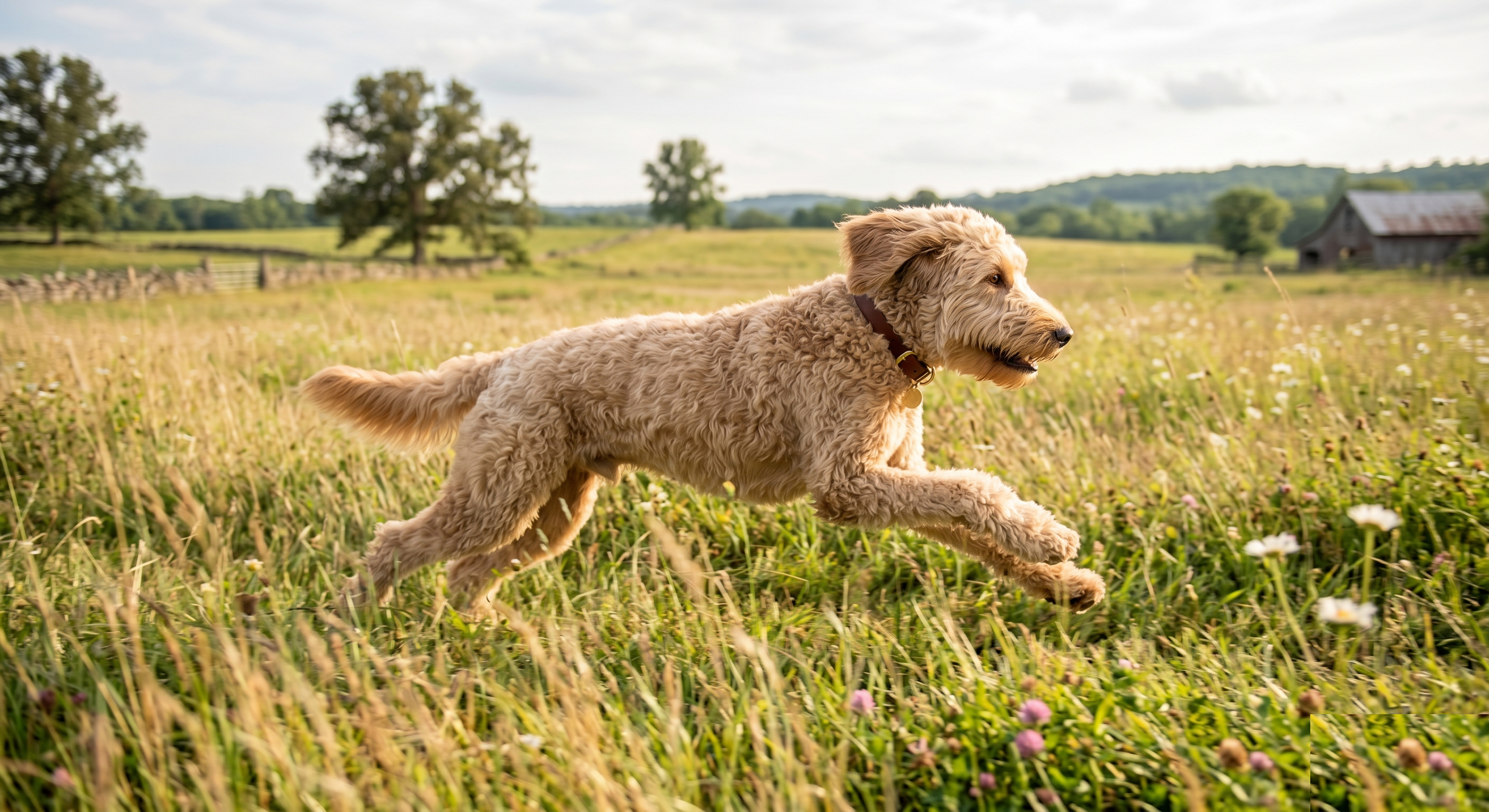
Labradoodles vary more than most purebred dogs because they are still a crossbred population with different generations, breeding goals, and parent sizes. Some are compact and lighter-framed, while others are tall, substantial, and unmistakably athletic.
Coat is one of the breed type’s most talked-about features. Labradoodles are commonly described as having hair, fleece, or wool coats. Hair coats may be straighter and more shedding. Fleece coats are often soft and wavy. Wool coats trend curlier and may require the most grooming maintenance.
That physical variation matters in the field. A tight-curled cream Labradoodle can present very differently from a taller black wavy-coated dog, even though both fit under the same general label. Searchers and sighting teams should think in terms of the individual dog’s real silhouette, color, and coat volume rather than the generic word “Labradoodle.”
Personality & Temperament
Labradoodles are typically described as friendly, trainable, and highly people-aware. They commonly blend Labrador sociability with Poodle intelligence, producing dogs that learn quickly, notice routine changes, and often seem deeply engaged with family life.
Many are what owners would call “velcro dogs.” They track household movement, shadow favorite people, and want to stay involved. That attachment can be wonderful in daily life, but it also means a loose dog may follow the wrong person, the wrong route, or the wrong burst of excitement.
Their emotional responsiveness does not make them automatically easy under stress. A Labradoodle that is over-aroused, startled, or in play mode can become much more mobile than people expect. In recovery work, friendliness should never be confused with instant catchability.
Living With This Breed
Labradoodles tend to do best when exercise, companionship, and mental engagement are built into daily life. This is usually not a dog that thrives on emotional neglect, chaotic inconsistency, or long periods of isolation.
Because they are often bright and socially engaged, many Labradoodles need more than a simple walk around the block. Training games, retrieval play, scent work, enrichment feeding, and structured routines can all help channel their energy and keep them steady.
Many also retain the Labrador habit of carrying objects, grabbing toys when excited, and moving enthusiastically toward water, parks, trails, or other activity zones. Those everyday preferences can become search clues if the dog ever gets loose.
History
The modern Labradoodle story begins in Australia in 1989, when Wally Conron of Guide Dogs Victoria bred a Standard Poodle to a Labrador Retriever in response to a request for a guide dog that might work in a home affected by allergies.
The first widely cited success from that effort was a dog named Sultan, who went on to work as a guide dog in Hawaii. That purposeful beginning is one reason the Labradoodle has always carried a stronger service and public-access origin story than many later doodle crosses.
The irony, of course, is that what began as a focused working cross quickly became a cultural phenomenon. Once the name “Labradoodle” caught attention, demand expanded far beyond guide work, and the broader doodle era followed.
Grooming & Health
Labradoodle grooming needs depend heavily on coat type. Curlier coats may shed less but usually need more brushing, clipping, and coat management. Looser coats may look easier but can still mat, collect burrs, and hold moisture if neglected.
Owners should be cautious with blanket “hypoallergenic” claims. Some Labradoodles may work better for some allergy-sensitive households than others, but no dog can honestly be guaranteed fully hypoallergenic, and coat outcomes vary from dog to dog.
Health discussions should stay practical rather than romantic. Crossbred dogs are not immune from inherited issues. Good breeding decisions, parent screening, and realistic expectations matter just as much here as they do in established purebred populations.
TailTracker Recovery Insight
The Labradoodle is best modeled as a dual-mode movement dog. Many individuals show strong owner attachment and high social interest, but they can switch quickly from staying near people to exploring outward when something exciting pulls them.
That means a loose Labradoodle may remain visible, approachable-looking, and active for longer than a more suspicious breed. The risk is not always deep concealment. The risk is movement momentum: the dog keeps linking one curiosity trigger to the next.
Labrador ancestry often contributes enthusiasm, retrieving instinct, and public friendliness. Poodle ancestry often adds sharp awareness, quick learning, and movement confidence. Together, those traits can create a dog that is highly recoverable early, but harder to contain once distance and stimulation stack up.
If This Breed Goes Missing
Start with the assumption that a Labradoodle may still be socially reachable, but may also be actively moving. Early search strategy should combine familiar recall opportunity with fast corridor coverage.
- Search familiar walking loops, neighborhood streets, parks, sidewalks, school fields, and other places tied to regular routine.
- Use the dog’s primary people, calm happy voice, routine cue words, and favored toy or treat sounds instead of loud scattered calling.
- Alert neighbors quickly. A friendly Labradoodle may approach a stranger, get invited into a yard, or be taken inside “for safety.”
- Check water-adjacent zones if relevant. Many Labradoodles inherit strong enthusiasm for ponds, beaches, streams, or wet trails.
- Avoid direct chase. An excited doodle can pivot from social approach to playful flight in seconds and widen the recovery radius fast.
Many Labradoodles are highly recoverable when action starts early. The key is to think in terms of containment and movement paths before curiosity turns into prolonged drift.
Fun Facts
The Labradoodle is widely considered the original modern doodle cross, and its creation is tied to a real service-dog need rather than a fashion-first breeding trend.
The name itself played a surprising role in the breed’s growth. What might have remained a niche service experiment became much more visible once the cross had a catchy identity people remembered.
Labradoodles are also famous for exuberant body language. Many greet the world with springy movement, toy carrying, full-body excitement, and what doodle owners often call “pogo” energy.
Famous Examples
Sultan remains the most historically important Labradoodle because he represents the original working success that gave the cross its real-world credibility.
Wally Conron’s early guide-dog program dogs are more important to Labradoodle history than celebrity pets because they define the breed type’s service-minded origin story.
In practice, though, the Labradoodle’s public image has been built by thousands of unnamed therapy dogs, school support dogs, family companions, and service prospects whose value comes from temperament more than fame.
Frequently Asked Questions
Are Labradoodles recognized as an official breed by major kennel clubs?
No. Labradoodles are still best understood as a crossbred dog type rather than a universally recognized formal breed under the major traditional kennel-club model.
Are Labradoodles always low-shedding or hypoallergenic?
No. Some are lower-shedding than others, but coat type varies widely and no individual dog can honestly be guaranteed completely hypoallergenic.
What is the biggest recovery mistake with a loose Labradoodle?
Underestimating movement. Many Labradoodles look easy to catch because they are social, but excitement, friendliness, and curiosity can keep them moving farther than expected.
Build a recovery plan before you need one.
TailTracker helps pet owners prepare smarter with breed-informed recovery guidance, organized alert workflows, and practical tools designed to support faster reunions.
Built to help reunite lost pets with the people who love them.