German Wirehaired Pointer
Breed Guide
Rugged, intense, and built for hard country, the German Wirehaired Pointer is a versatile sporting dog with a weather-resistant coat, serious field drive, and a practical working mind. It shares German hunting-dog roots with the German Shorthaired Pointer, but its missing-dog profile is distinct: more cover-tolerant, more all-weather capable, and often more willing to push through brush, wetland, cold rain, and rough terrain instead of turning back.
7 min read · Premium breed intelligence with recovery-focused field guidance
Overview
The German Wirehaired Pointer is a rugged, medium-to-large sporting dog developed for hunters who needed one dog that could work across many jobs: locating game, pointing, retrieving on land, retrieving from water, and tracking through difficult country. This is not a decorative wire-coated version of another breed. It is a purpose-built, all-weather field dog.
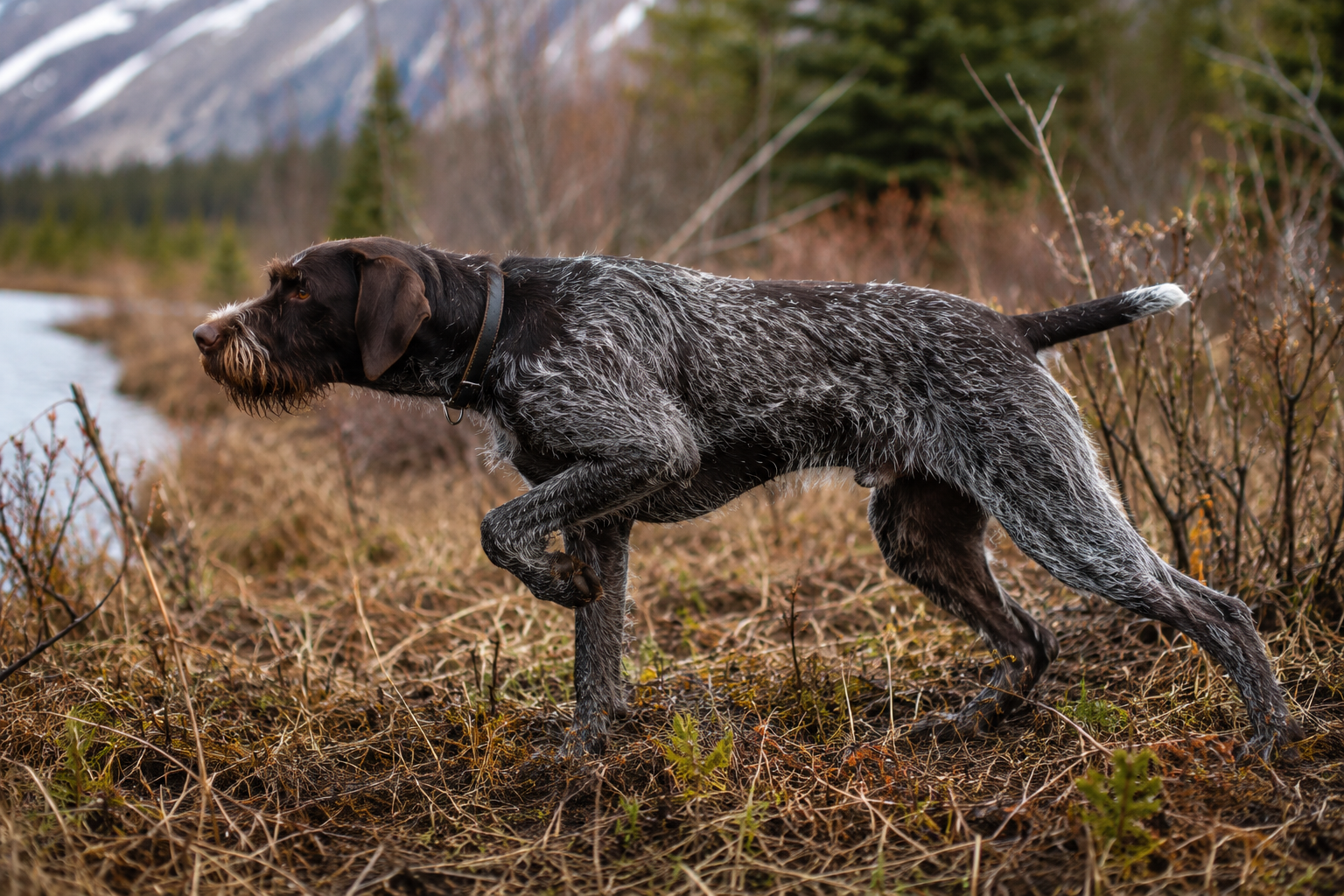
Around the home, many German Wirehaired Pointers are affectionate, alert, loyal, and entertaining. In the field, they are serious workers. Their harsh coat, facial furnishings, deep chest, strong legs, and high prey drive all support the same theme: keep working when conditions are wet, cold, thorny, muddy, or visually confusing.
TailTracker treats the breed as a rugged all-weather quartering dog. A missing German Wirehaired Pointer may not simply run down the nearest sidewalk or wait at the first friendly porch. It may push into dense cover, follow scent through wetland edges, investigate wildlife corridors, or remain active in weather that would send many short-coated dogs looking for shelter.
Breed History
The German Wirehaired Pointer developed in Germany during the late nineteenth and early twentieth centuries, when hunters and breeders were refining practical, versatile gundogs for varied terrain and demanding field work. The German name Deutsch Drahthaar reflects the breed’s wire-haired identity.
The breed’s development drew from German pointing-dog tradition and from other wire-coated hunting dogs used to strengthen coat protection, water work, scenting ability, and field toughness. Historical accounts commonly connect the breed’s foundation with types such as the German Shorthaired Pointer, Pudelpointer, Wirehaired Pointing Griffon, and related German wire-coated stock.
The German Wirehaired Pointer was accepted into the American Kennel Club in 1959. Its broader working identity remains closely tied to the continental idea of the versatile hunting dog: one dog expected to perform across upland, water, tracking, and recovery tasks rather than specialize narrowly.
Physical Characteristics
The German Wirehaired Pointer is strong, balanced, and somewhat rectangular in outline. Males are typically 24 to 26 inches at the shoulder, while females are smaller but generally not under 22 inches. Typical adult weight is about 50 to 70 pounds, depending on sex, build, and conditioning.
Its defining physical feature is the coat. The outer coat should be harsh, straight, wiry, and flat lying, usually about one to two inches long. It is not meant to be fluffy or soft. The purpose is protection: enough length and texture to shield against brush, brambles, cold water, and rough cover without hiding the dog’s athletic outline.
The beard and eyebrows are also functional. They give the breed its classic expression, but they also help protect the muzzle and eyes when the dog works through thorny or wet cover. A deep chest supports stamina, webbed feet assist water work, and the tail is traditionally carried straight or nearly straight as part of the dog’s field silhouette.
Temperament
German Wirehaired Pointers are typically energetic, intelligent, loyal, and determined. They tend to bond closely with their people but may be more reserved with strangers than some softer sporting breeds. Many are affectionate at home and intense outdoors, shifting quickly from family companion to task-focused worker.
Compared with the German Shorthaired Pointer, the Wirehaired often reads as more rugged, more deliberate, and sometimes more independent in problem-solving. This does not make it less trainable. It means training needs to respect the dog’s working mind: motivation, consistency, field-safe boundaries, and real outlets matter.
In missing-dog modeling, the key temperament pattern is owner-bonded but field-directed. A German Wirehaired Pointer may care deeply about its owner and still choose scent, wildlife movement, water, or cover when aroused. Recovery plans should not assume attachment alone will overcome working drive.
Living With This Breed
Living well with a German Wirehaired Pointer usually means living with an outdoor athlete. This breed needs daily physical and mental work: running, field training, scent games, retrieval, hiking, swimming, tracking, or structured sport. Without enough outlet, the same intelligence that makes the dog useful in the field can turn into escape attempts, nuisance behavior, or restless scanning for something to do.
The breed is best suited to active homes that enjoy training and outdoor life. It can be a strong family dog, but it is not a casual low-exercise pet. Secure fencing, recall foundations, leash manners, impulse control, and careful wildlife management should be treated as normal ownership requirements.
- Needs serious exercise and structured mental work, not just casual walks.
- May be affectionate and playful with family but reserved or watchful with unfamiliar people.
- Benefits from hunting, tracking, scent work, field sports, dock work, hiking, or retrieving games.
- Requires secure containment; prey drive and curiosity can overcome ordinary boundaries.
- Often tolerates bad weather better than owners expect, which matters in both daily life and recovery.
- Needs coat and field checks after rough-cover outings: burrs, ticks, cuts, seed heads, and ear debris.
Grooming and Health
The German Wirehaired Pointer’s coat is practical, but it is not maintenance-free. Weekly brushing helps remove dead hair, burrs, and outdoor debris. After field work, owners should check the beard, eyebrows, ears, paws, armpits, and underside for ticks, thorns, foxtails, matting, or small cuts.
Responsible breeders screen for breed-relevant health concerns, and owners should work with a veterinarian familiar with athletic sporting dogs. As with many deep-chested active breeds, owners should understand bloat risk, orthopedic injuries, ear issues, eye concerns, and the wear-and-tear that can come from hard running, jumping, swimming, and rough terrain.
From a recovery perspective, this breed’s health risk profile is field-related: dehydration, road exposure, barbed wire, cold water, dense vegetation, paw injury, overheating during hard exertion, and hidden fatigue. A missing German Wirehaired Pointer can keep working past the point at which a person expects it to stop.
German Wirehaired Pointer vs. German Shorthaired Pointer
The German Wirehaired Pointer and German Shorthaired Pointer should be treated as related but not interchangeable. Their pages should work together: the Shorthaired page explains the sleek, high-speed, open-ground momentum profile; this page emphasizes the Wirehaired dog’s tougher coat, denser-cover tolerance, and all-weather persistence.
| Trait | German Wirehaired Pointer | German Shorthaired Pointer |
|---|---|---|
| Coat | Harsh, wiry, flat-lying outer coat with beard and eyebrows for cover protection. | Short, dense, sleek coat with less protection in brambles and cold wet cover. |
| Typical field feel | Rugged, deliberate, cover-capable, water-and-brush tolerant. | Fast, athletic, open-ground efficient, momentum-driven. |
| Missing-dog bias | May stay deeper in brush, marsh, wooded edges, rough fields, or cold rain. | May expand distance rapidly through open terrain, trails, fields, and corridors. |
| Recovery emphasis | Search dense cover and water edges earlier; use passive stations and camera checks near game corridors. | Map direction of travel quickly and expand along open corridors, trails, and field edges. |
Fun Facts
- Deutsch Drahthaar means wire-haired German dog: The German name points directly to the coat that defines the breed.
- The beard is not just decoration: Facial furnishings help protect the muzzle and eyes in rough cover.
- Built for many jobs: The breed can point, retrieve, track, work water, and search across changing terrain.
- Not a shaggy GSP: The Wirehaired and Shorthaired Pointers are distinct breeds with different coat protection and field style.
- Weather matters less to them: Cold drizzle, mud, and marsh may slow people long before they slow a motivated Wirehair.
- The coat should be harsh and practical: A soft, fluffy coat misses the breed’s functional purpose.
- Often visually expressive: Eyebrows and beard give the breed a thoughtful, serious look even when it is being playful.
Famous Examples
German Wirehaired Pointers are better known in field, hunting, and performance communities than in mass pop culture. Their most important public legacy is not a single movie dog but the many dogs that have proved themselves in conformation, field trials, hunt tests, versatile-dog testing, search work, and conservation-related scent roles.
- Dual-purpose sporting dogs: The breed is often valued when a dog can be both structurally correct and genuinely useful in the field.
- Versatile hunting programs: German Wirehaired Pointers frequently appear in organizations focused on field performance, tracking, water work, and practical hunting ability.
- Working conservation and detection roles: Individual wirehaired pointers and related versatile pointing dogs have been used in wildlife, tracking, and scent-discrimination work because of their endurance and cover confidence.
- Everyday field legends: Many of the breed’s most admired examples are known locally: dogs remembered by handlers for steadiness, grit, nose, and the willingness to keep working in miserable weather.
TailTracker Recovery Insight
The German Wirehaired Pointer fits TailTracker’s rugged all-weather quartering dog archetype. When loose, the dog may begin as a highly owner-bonded companion but quickly switch into field mode if it detects wildlife, scent, water, or movement. The search pattern can be broad, purposeful, and terrain-driven.
A missing German Wirehaired Pointer may quarter through cover instead of running in a straight line. It may work into brush, cast back and forth across scent, follow the edge of a marsh, investigate a drainage line, or move from one cover pocket to another. Unlike a short-coated dog, it may not quickly abandon cold rain, wet grass, or thorny cover.
TailTracker’s recovery model prioritizes: escape point → first direction of travel → nearby scent-rich terrain → field edges and wetland margins → dense-cover pockets → water access → passive feeding and camera stations near likely game corridors. Roadside sightings still matter, but this breed may spend long periods out of sight in terrain that casual searchers avoid.
The recovery paradox is that the breed may be attached to its people but hard to interrupt once hunting momentum takes over. Calm owner-led engagement, familiar scent, food stations, and low-pressure containment often work better than crowds, chasing, or repeated calling from strangers.
When This Breed Is Missing
Treat a missing German Wirehaired Pointer as a high-drive sporting dog with unusual rough-cover tolerance. Do not assume it will choose easy ground, avoid water, or stop because the weather is poor. This breed can stay functional in places where many searchers are reluctant to go.
The German Wirehaired Pointer Search Profile
- High prey drive: wildlife scent and movement can pull the dog away from owner recall.
- Broad quartering behavior: the dog may sweep back and forth across cover rather than follow a simple straight path.
- Dense-cover confidence: brambles, brush, marsh grass, and wooded edges should be searched early.
- Weather tolerance: rain, cold, mud, and water may not push the dog toward houses as quickly as expected.
- Moderate stranger response: some individuals may approach, but many will stay task-focused or evasive under pressure.
- Containment challenge: fences, gates, and ordinary boundaries may fail if drive remains high.
First Operational Priorities
- Confirm the exact escape point and identify likely triggers: wildlife, gunfire, field activity, water, livestock, other dogs, or runners.
- Map first direction of travel and do not over-focus on the home block if the dog left with speed or field intent.
- Search field edges, conservation land, wetlands, wooded corridors, power lines, utility cuts, farm lanes, drainage ditches, and brush piles.
- Ask witnesses whether the dog was nose-down, quartering, pointing, trotting with purpose, or moving toward cover.
- Set familiar scent, water, and high-value food at home and at safe suspected pause points.
- Use trail cameras where the dog may circle back through game corridors or feeding locations.
- Avoid chase pressure; use calm owner presence, crouched posture, soft voice, and food once visual contact is made.
Recovery Tactics That Often Work Better
| Trait | Likely Missing-Dog Behavior | Best Tactical Response |
|---|---|---|
| Harsh protective coat | May continue through brush, wetland, rain, and rough cover | Search terrain other dogs might avoid: briars, marsh grass, wooded edges, and cold water access. |
| High prey drive | Tracks wildlife, birds, or movement across large areas | Prioritize game trails, field margins, farm edges, and dawn/dusk sighting windows. |
| Quartering field style | Sweeps side-to-side across scent zones instead of traveling in a neat line | Map likely cover blocks and search connected terrain, not just roads. |
| Owner bond plus independence | May recognize owner but remain hard to interrupt under drive | Use passive lures, familiar scent, and calm owner-led engagement instead of pursuit. |
| Problem-solving drive | Can slip barriers or avoid direct capture pressure | Use controlled feeding stations, cameras, and quiet containment planning. |
Expert TailTracker Note
The German Wirehaired Pointer is not simply a fast sporting dog. It is a hard-country sporting dog. Recovery teams should think less like they are searching for a pet that dislikes bad weather, and more like they are tracking a motivated field dog that may be comfortable exactly where humans are least comfortable searching.
Frequently Asked Questions
Is the German Wirehaired Pointer the same as the German Shorthaired Pointer?
No. They are related in purpose and geography, but they are distinct breeds. The German Wirehaired Pointer has a harsh protective coat, beard, eyebrows, and a more rugged cover-oriented field profile. The German Shorthaired Pointer is usually sleeker, shorter-coated, and more visibly built around open-ground speed.
How far can a German Wirehaired Pointer travel when missing?
A motivated dog can travel several miles, especially if it enters hunting mode. Distance depends on terrain, weather, conditioning, prey triggers, and whether early sightings help redirect the search quickly.
Will a lost German Wirehaired Pointer come when called?
Sometimes, but recall can become unreliable under prey drive, field excitement, or stress. Recovery should combine owner voice with terrain mapping, food, scent anchoring, and low-pressure tactics.
Where should searchers look first?
Start with direction of travel, then check field edges, wooded cover, marsh paths, drainage ditches, utility cuts, farm lanes, water access, and places where wildlife corridors intersect roads or trails.
What is the biggest recovery mistake with this breed?
Assuming it will avoid rough weather or dense cover. The breed was built to work through exactly those conditions, so search teams must include hard-to-search terrain early.
Related Breed Guides
Compare the German Wirehaired Pointer with related sporting breeds to understand how coat, field style, and drive change recovery planning.
Build a breed-informed recovery plan before your dog ever goes missing.
TailTracker helps pet families prepare smarter with breed-aware recovery guidance, coordinated alerts, and a faster path from panic to action.
Most missing-pet tools broadcast alerts.
TailTracker coordinates the recovery.