Beagle
Breed Guide
Friendly, curious, and strongly scent-driven, the Beagle is one of the clearest examples of a breed whose nose can shape what happens after escape. That makes Beagles especially important for recovery planning.
5 min read · Practical pet-owner education with recovery-focused guidance
Overview
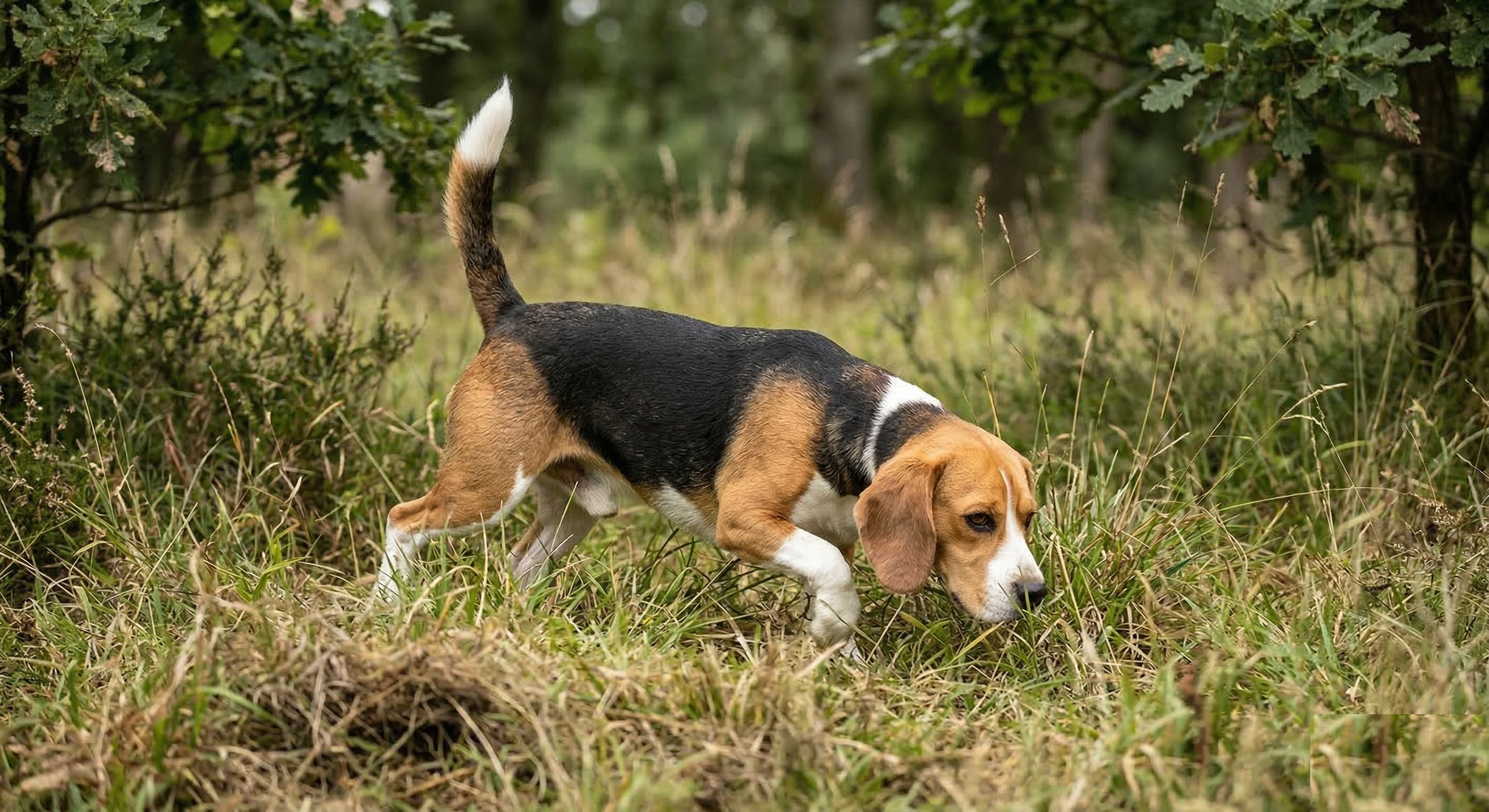
The Beagle is a compact scent hound developed to track hare and rabbit with determination and stamina. It is widely loved for its expressive face, merry nature, and manageable size, but what truly defines the breed is its nose. A Beagle is built to notice, follow, and stay engaged with scent.
That combination makes the breed both charming and challenging. Many Beagles are affectionate, social, and enjoyable family companions, yet they can become intensely focused when an interesting smell appears. For owners, that means understanding the Beagle is not just about temperament. It is also about instinct.
Personality & Temperament
Beagles are often described as cheerful, curious, and friendly. They tend to enjoy people and may do well in active homes that provide structure, routine, and enrichment. Many are affectionate with family members and lively without being physically imposing.
At the same time, Beagles can be independent thinkers. This is not stubbornness for its own sake. It is often the practical mindset of a dog bred to keep working with its nose. A Beagle may hear you, but a strong scent trail can still win the competition for attention.
That distinction matters in everyday life and even more during an escape. A breed that is friendly in the home may still behave very differently outside if scent, excitement, or fear takes over.
Living With This Breed
Living well with a Beagle usually means accepting that secure containment is not optional. Reliable fencing, attentive leash habits, and thoughtful recall work are especially important. Because scent is such a powerful motivator, many owners discover that a Beagle's real challenge is not lack of affection. It is environmental distraction.
Beagles often thrive with regular activity, sniff walks, scent games, and routines that give them a productive outlet for their instincts. Mental engagement matters. A bored Beagle can become noisy, restless, or more likely to test boundaries.
Families who understand the breed's hunting heritage often do best. The Beagle may be small compared with many working breeds, but its instincts are serious and deeply wired.
History
Beagles were refined in Great Britain as small hounds capable of following scent with persistence over varying terrain. Their size made them practical for hunters on foot, while their tracking ability made them effective for pursuing small game.
Over time, the breed grew far beyond field use and became a beloved companion dog. Even so, the traits that made Beagles useful as hunting hounds never disappeared. Their nose, stamina, curiosity, and willingness to stay engaged with a trail remain central to the breed today.
TailTracker Recovery Insight
The Beagle is one of the strongest early examples of why breed intelligence matters in lost-pet recovery. If a Beagle slips out, owners and volunteers often make a costly assumption: that the dog is nearby and will simply circle back once called.
Sometimes that happens. Often, however, the Beagle continues moving while investigating scent. That means the real search picture may look less like a frightened pet hiding in one place and more like a small hound advancing through scent-rich routes such as trails, wooded edges, drainage lines, field margins, and suburban greenbelts.
TailTracker treats that as operational intelligence, not trivia. A breed with strong scent commitment may need a different search pattern, different volunteer behavior, and more patience than a more human-oriented breed.
If This Breed Goes Missing
A loose Beagle may continue traveling while following scent trails rather than returning directly home. That does not mean the dog is ignoring the family out of disloyalty. It means instinct may be driving behavior in the moment.
- Search outward along trails, field edges, brush lines, and other natural or suburban corridors.
- Do not assume the dog stayed close to the exact escape point.
- Avoid direct chase whenever possible. Pressure can increase movement and make containment harder.
- Use calm voices, familiar scent items, food lures, and patient observation.
- Pay special attention to parks, trailheads, rabbit habitat, and green strips between neighborhoods.
A Beagle may also be more approachable than a highly fearful breed, but that should not create false confidence. Even a social dog can become evasive when overstimulated, confused, or repeatedly pursued.
Fun Facts
The Beagle is one of the best-known scent hounds in the world. Its long ears, expressive eyes, and compact build make it instantly recognizable, but its real signature is its extraordinary interest in smell.
The most famous pop-culture Beagle is probably Snoopy, whose imagination helped make the breed familiar to generations of families. In real life, though, the Beagle is less daydreaming philosopher and more determined little tracker.
Frequently Asked Questions
Are Beagles prone to wandering?
Yes. Because Beagles are scent hounds, they may continue following scent trails if they escape.
How far can a lost Beagle travel?
A Beagle following scent may travel farther than expected, especially along trails, wooded edges, or green corridors.
Are Beagles easy to approach when lost?
Many Beagles are friendly, but excitement, scent fixation, or fear can still make them evasive when loose.
Be ready before an emergency.
TailTracker helps owners prepare before a pet goes missing, so they can act faster with a clearer plan if the unthinkable happens.
Most lost-pet tools broadcast alerts.
TailTracker coordinates the recovery.