American Pit Bull Terrier
Breed Guide
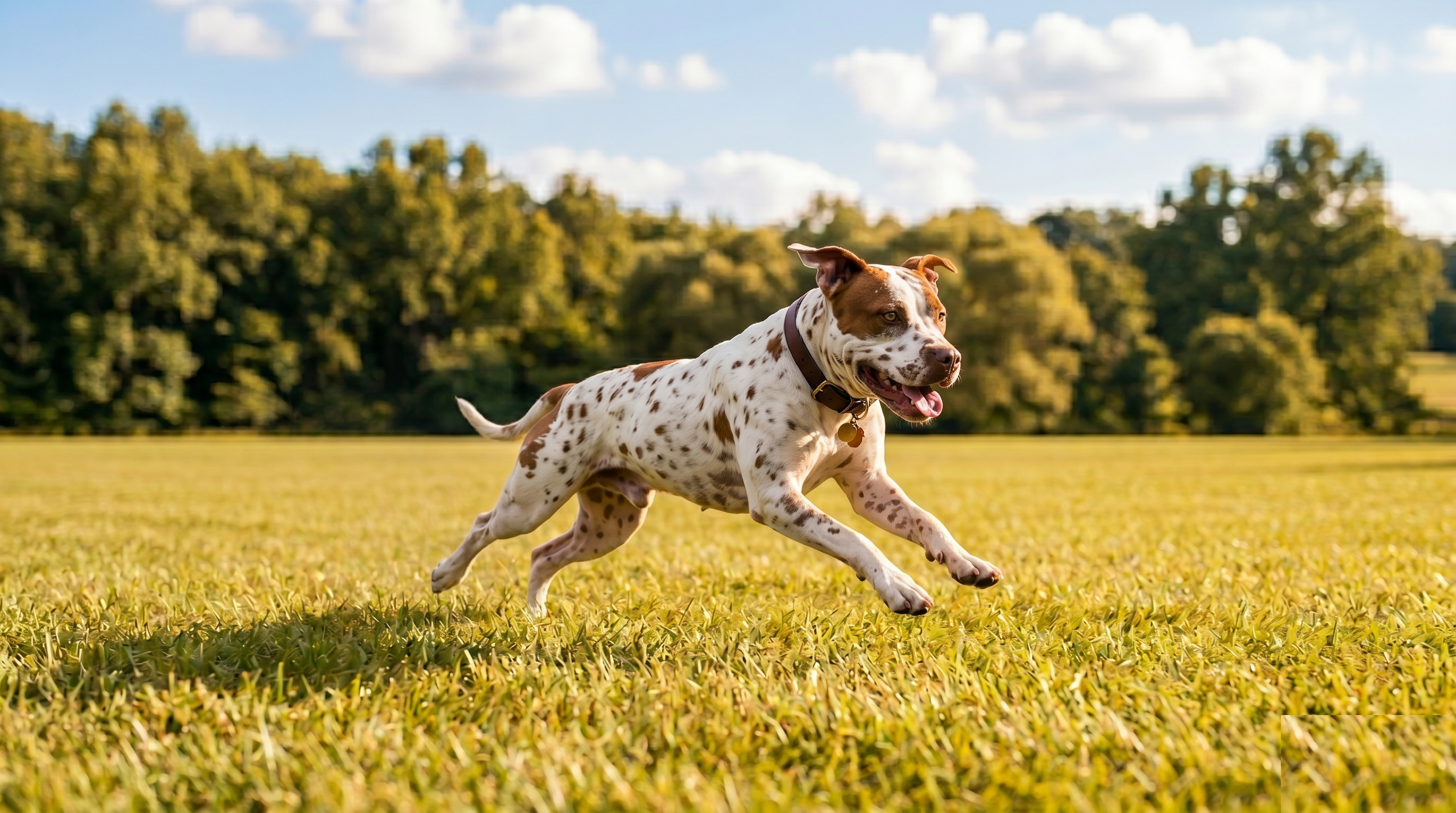
Athletic, affectionate, and intensely people-oriented, the American Pit Bull Terrier is a driven working terrier whose confidence, strength, and social bonding can shape what happens after escape. For recovery planning, this is a breed where speed, visibility, and smart handling matter.
5 min read · Practical pet-owner education with recovery-focused guidance
Safety Note on Breed Variability and Local Regulations
The American Pit Bull Terrier is a breed type with significant variation in behavior depending on breeding, training, and life experience. While many individuals are stable and people-oriented, others may be more reactive or difficult to handle, particularly under stress.
In addition, some municipalities have breed-specific regulations or restrictions. These policies can affect how sightings are reported, how responders interact with the dog, and which agencies may become involved.
For these reasons, TailTracker recommends a cautious, non-confrontational recovery approach, prioritizing:
- Distance observation
- Calm body language
- Food-based engagement
- Involving experienced handlers when needed
This approach improves recovery outcomes while reducing risk for the public, volunteers, and the dog.
Overview
The American Pit Bull Terrier—often referred to simply as a Pit Bull—is a physically capable, emotionally intense, and highly human-connected breed. In good homes, these dogs are often affectionate, animated, and eager to engage. They tend to thrive on structure, activity, and direct contact with their people.
For TailTracker purposes, this is an important combination. Pit Bulls are strong enough to travel decisively, curious enough to keep moving, and social enough that people can become part of the recovery equation very quickly. That means a missing Pit Bull may not behave like a timid hiding dog, but it also should never be assumed to be easy to catch once adrenaline takes over.
Breed History
The American Pit Bull Terrier descends from bull-and-terrier dogs developed from bulldog and terrier stock in the British Isles. Those early dogs were valued for grit, agility, physical control, and working usefulness. When they came to the United States, the type continued to develop into a versatile all-around dog used around farms and homesteads as a companion, catch dog, and general-purpose utility animal.
Modern discussion around pit bull–type dogs is often clouded by the fact that “pit bull” can be used as a broad umbrella term in everyday speech. This page is focused specifically on the American Pit Bull Terrier, a recognized breed in organizations such as the United Kennel Club, where the standard emphasizes a balanced, athletic dog built for strength, speed, agility, and stamina.
That working heritage still matters. Even when living primarily as companions, many individuals retain the breed’s physical confidence, persistence, and readiness to move with purpose once excited, aroused, or disconnected from their handler.
Physical Characteristics
The American Pit Bull Terrier should look balanced rather than exaggerated. A good example is muscular and powerful, but also agile and efficient. The body is typically slightly longer than tall, the chest is deep, the head is broad without looking coarse, and the coat is short and smooth.
Weight varies substantially depending on line and condition, but many healthy adults fall in a moderate range that combines compact strength with speed. The short coat comes in a wide variety of colors and patterns. Merle is generally excluded from standard descriptions of the breed, while brindle, fawn, black, blue, red, white, and combinations of these are commonly seen.
From a recovery standpoint, the physical picture matters because this breed can accelerate fast, push through brush or fencing more effectively than many pet owners expect, and continue moving long after a smaller or less conditioned dog would tire out.
Temperament
Well-bred, well-socialized Pit Bulls are often remarkably affectionate with their people. Many are playful, outgoing, expressive, and eager for shared activity. They frequently bond hard, lean into physical closeness, and respond best to clear, consistent handling rather than emotional inconsistency.
This is also a breed with real intensity. A Pit Bull’s focus can be powerful, persistence can be high, and once a dog commits to movement or stimulation, it may not self-interrupt easily. Some individuals are very social with unfamiliar people, while others are more selective. Dog-directed tension can vary widely by individual and experience, so that variable should never be ignored when planning field contact.
TailTracker models this breed as a dog that is often more socially engaged than fearful, but still very capable of flight if overstimulated. Calm approach strategies tend to work better than pressure, crowding, or urgent owner pursuit. Many Pitties remain highly connected to people, but stress can still override that bond. Even friendly Pibbles may hesitate under pressure.
Living With This Breed
The American Pit Bull Terrier tends to do best with meaningful daily structure. This is usually not a breed that thrives on being parked in the background. Most Pit Bulls need regular exercise, training, environmental enrichment, and clear expectations. They often enjoy flirt poles, structured tug, scent games, hiking, obedience work, and other activities that let them use both body and brain.
Because many are highly people-oriented, long periods of boredom, isolation, or inconsistent management can create frustration. In the home, these dogs often want to be close to the action. Many Pibbles form strong bonds with their families and prefer to be actively involved in daily life. In the field, that same people-focus may pull them toward a familiar voice or visible person, but only if arousal has not already tipped them into chase, scanning, or forward movement.
- Best with daily physical outlets and consistent handling.
- Often emotionally attached and responsive to familiar people.
- May require thoughtful management around unfamiliar dogs.
- Can be highly trainable when motivation and structure are aligned.
Grooming and Health
Grooming is usually straightforward. A Pit Bull’s short coat is low maintenance, though regular brushing can help reduce shedding and keep skin and coat healthy. Because the coat is minimal, many dogs are more exposed to cold, wet conditions, rough vegetation, and surface abrasions than heavily coated breeds.
Common practical concerns in the breed type include skin irritation, environmental allergies, and the wear that can come with very high physical activity. Owners should also pay attention to body condition. A fit American Pit Bull Terrier is an efficient mover; excess weight changes both health and recovery stamina.
For missing-dog operations, the short coat can cut both ways: it reduces snagging in some brush, but it can also make a dog more likely to seek warmth, shelter, bedding, decks, porches, vehicles, or sun-warmed surfaces if weather is uncomfortable.
Fun Facts
Although public conversation around pit bull–type dogs is often polarized, the American Pit Bull Terrier has a long history as a versatile American working companion. Pit Bulls have appeared in The breed has appeared in war stories, early film, dog sports, and countless family homes.
- Many examples are unusually expressive and physically demonstrative with people they trust.
- The breed’s athletic design is about balance and function, not just muscle.
- Many owners affectionately refer to their dogs as Pitties or Pibbles due to their expressive and social personalities.
- American Pit Bull Terriers are active participants in sports ranging from weight pull to obedience and agility.
- Because “pit bull” is often used loosely, individual dogs are frequently mislabeled in shelters and public conversation.
Famous Examples
A number of famous dogs associated with the American Pit Bull Terrier or pit bull–type lineage have shaped how the public sees the breed. The best-known examples span wartime service, film, and popular culture.
- Sergeant Stubby — the decorated World War I dog widely associated with pit bull–type ancestry.
- Pete the Pup — the dog from The Little Rascals, one of the most recognizable pit bull–type dogs in entertainment history.
- Sallie Ann Jarrett — Civil War mascot of the 11th Pennsylvania Infantry, often cited in pit bull historical lore.
TailTracker Recovery Insight
The American Pit Bull Terrier often presents as a mobile + human-seeking hybrid in a lost-dog scenario. This means the dog may cover ground with confidence, but is also more likely than a deeply suspicious or feral-style breed to engage with humans, approach a porch, enter a yard, investigate a person, or accept food under the right conditions.
The major operational mistake with this breed is assuming strength equals confidence in every lost-dog moment. Some Pit Bulls remain social and approach-friendly when displaced. Others flip fast into excited, evasive movement and become surprisingly hard to contain. That is why field handling should be driven by observed behavior, not stereotype.
In practical terms, this breed often rewards a two-track strategy: public visibility so sightings come in quickly, and controlled recovery setup so the dog is not pushed farther once seen.
If This Breed Goes Missing
Start fast. The first hours matter because a Pit Bull can travel decisively and may move in a straight, purposeful way before slowing down. Search nearby roads, sidewalks, parks, apartment complexes, school fields, industrial edges, and routes with people, smells, or motion.
- Do not assume hiding first. Many will move before they settle.
- Push sightings hard. This is a breed where public reports can make the difference quickly.
- Use food strategically. High-value scent can help create an anchor, and many Pitties respond well to food-based setup.
- Avoid direct chase. Pressure can trigger flight, even in a people-loving dog.
- Watch for looping. Some dogs circle back toward familiar routes, home territory, or routine walking corridors.
- Assess dog sociability in real time. One dog may walk up to a stranger; another may bolt at the slightest reach.
If the dog is sighted but not secured, slow the operation down. Shift from broad pursuit to pattern mapping, feeding strategy, camera use, and calm capture planning.
Frequently Asked Questions
Are American Pit Bull Terriers naturally aggressive toward people?
Broad assumptions are not useful. Individual temperament depends on genetics, socialization, training, handling, and stress state. Many Pit Bulls are notably affectionate with people, but all dogs should be evaluated as individuals.
Do Pit Bulls stay close to home when loose?
Not reliably. Some do loop back, especially if strongly bonded and in familiar territory, but many will move more decisively than owners expect in the first phase of escape.
Is food useful in recovering a Pit Bull?
Often yes. Many American Pit Bull Terriers are strongly food-motivated, and high-value bait can be part of an effective anchoring or trapping plan once the dog’s movement pattern is understood.
What is the biggest recovery mistake with this breed?
Rushing straight at the dog after a sighting. Even a social dog can pivot into flight if it feels pressure, excitement, grabbing, or crowding.
Related Breed Guides
Comparing recovery behavior across similar or commonly confused breeds can improve search assumptions and owner education.
Build a breed-informed recovery plan before your dog ever goes missing.
TailTracker helps pet families prepare smarter with breed-aware recovery guidance, coordinated alerts, and a faster path from panic to action.
Most lost-pet tools broadcast alerts.
TailTracker coordinates the recovery.