Nova Scotia Duck Tolling Retriever
Breed Guide
Intelligent, eager, and intensely energetic, the Nova Scotia Duck Tolling Retriever is a compact sporting breed whose birdiness, motion sensitivity, and retrieving drive can strongly shape what happens after escape. That makes this breed especially important for recovery planning.
5 min read · Practical pet-owner education with recovery-focused guidance
Overview
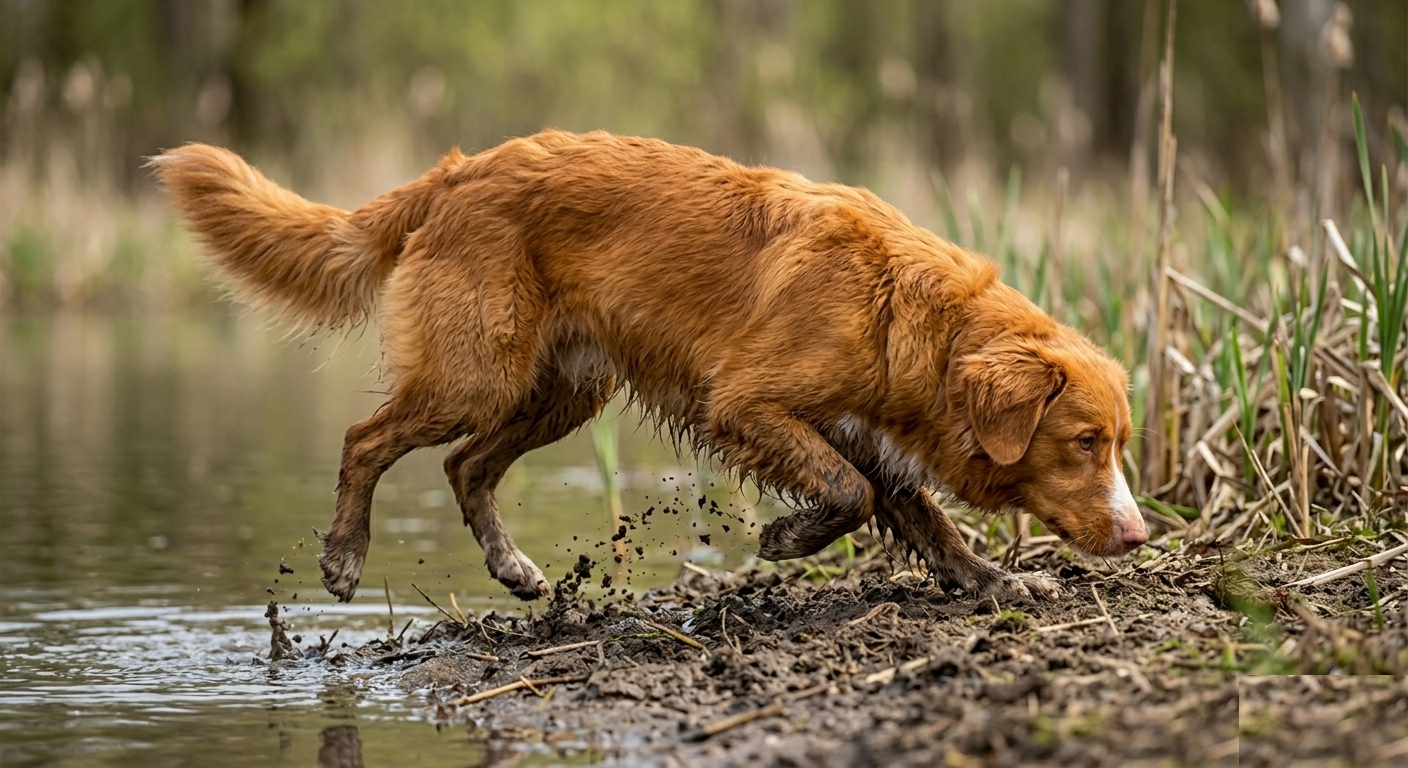
The Nova Scotia Duck Tolling Retriever, often simply called the Toller, is a medium-sized gun dog and the smallest of the retriever breeds. It was developed in Yarmouth County, Nova Scotia, and is best known for “tolling” — using playful movement near the water’s edge to lure curious ducks and geese closer before retrieving downed birds.
What makes the breed especially distinctive is the combination of retriever instincts and motion-driven stimulation. A Toller is not just a smaller Golden Retriever lookalike. The breed was developed for intense field work, cold-water retrieving, quick bursts of animation, and close cooperation with a hidden hunter.
That working blueprint matters in recovery. Tollers often combine speed, intelligence, high arousal, and environmental curiosity in ways that can either help or complicate a lost-dog situation.
Personality & Temperament
Tollers are commonly described as intelligent, alert, outgoing, affectionate, eager to please, and very high-energy. They are often busy dogs, happiest when they have a job to do, and they may become destructive or difficult if they are under-exercised or left alone too long.
At the same time, the breed often carries an important contrast: energetic and social with its own people, but more reserved or cautious around strangers if not well socialized. That difference matters enormously in recovery. A dog that is playful and enthusiastic at home may still avoid unfamiliar helpers when stressed.
Tollers also have a notable vocal quirk sometimes called the “toller scream,” a high-pitched howl-like sound associated more with excitement than aggression. Owners unfamiliar with how arousal affects the breed may misread that intensity during a recovery attempt.
Living With This Breed
Living well with a Toller usually means committing to both physical and mental work. These dogs often thrive with retrieving games, structured exercise, obedience, agility, scent tasks, dock diving, and outdoor activity that channels their energy productively.
Many Tollers are not content as passive household dogs. They tend to be at their best when they can think, move, and interact purposefully with their people. Without that outlet, restlessness and escape opportunities can become more likely.
Their water-repellent double coat and webbed feet reflect their retrieving heritage. Seasonal shedding is expected, and many Tollers remain highly enthusiastic about water, birds, thrown objects, and anything that feels like a game with momentum.
History
The breed was developed in the Acadian community of Little River Harbour in Yarmouth County, Nova Scotia around the early nineteenth century. It was originally known as the Little River Duck Dog before later recognition as the Nova Scotia Duck Tolling Retriever.
The Toller’s development likely involved retriever, spaniel, setter, and possibly collie-type influences. Whatever the exact mixture, the final result was a compact retriever that could entice waterfowl through animated shoreline play and then retrieve efficiently in cold conditions.
That history is unusually important because it explains why Tollers are so tuned to motion, stimulation, birdiness, and the excitement of interactive work.
TailTracker Recovery Insight
The Nova Scotia Duck Tolling Retriever is one of the clearest examples of a breed whose lost-dog behavior may be strongly shaped by movement, stimulation, and interactive environmental cues. A loose Toller may not simply drift at random. It may move toward water, bird activity, thrown objects, running people, dogs at play, or open spaces that feel like work or game environments.
Compared with a Labrador, the Toller may be slightly more reserved with strangers and more intense in arousal. Compared with a Beagle, it is usually less scent-absorbed in a straight hound sense, but still highly driven by environmental targets. Compared with a Golden Retriever, it may show a bit more caution and sharper sensitivity.
TailTracker models this breed as high in retrieving drive, high in stimulation sensitivity, moderate-to-high in wander risk, and moderate in stranger approachability under stress. Recovery can go very well when familiar handlers use calm structure, but it can unravel quickly if helpers accidentally create a thrilling chase or over-aroused interaction.
If This Breed Goes Missing
A loose Toller may cover meaningful ground if something stimulating pulls it forward. Water access, birds, play movement, dog traffic, fields, and shoreline-like environments may all matter. This is a breed where “excited but not necessarily gone” is a real possibility.
- Search first around ponds, marsh edges, beaches, creeks, athletic fields, trails, parks, and bird-rich open areas.
- Use familiar handlers, familiar toys, retrieving cues, and calm voice tone before introducing pressure.
- Avoid creating a chase game. Fast movement, shouting, or multiple people closing in can make a Toller keep moving instead of checking in.
- Account for stranger reserve. A dog that is playful with family may still hesitate with unfamiliar people when stressed.
- Re-check water edges and open recreation corridors repeatedly. The breed’s retrieving and tolling instincts make those environments unusually relevant.
The biggest mistake is underestimating how easily excitement can override recall. With a Toller, the recovery scene itself can become part of the dog’s stimulation.
Health & Practical Care
Tollers are often described as generally hardy, but the breed also carries several documented health concerns. Your uploaded source highlights eye disease, hip dysplasia, thyroid problems, epilepsy, Addison’s disease, immune-related disorders, and steroid-responsive meningitis–arthritis among the better-known issues.
The same source also notes that the breed’s genetic diversity has narrowed substantially over time, which helps explain why breeders and breed clubs place such emphasis on health testing. For owners, the practical takeaway is simple: this is an athletic breed, but not one to assume is automatically trouble-free just because it looks tough and capable.
In recovery planning, health matters because a Toller may move hard, swim, jump, or work through rough ground enthusiastically. A dog that is physically willing may still carry hidden risk, especially if already stressed, overheated, or pushed too long.
Frequently Asked Questions
Are Tollers likely to wander far?
They can cover meaningful ground, especially toward water, birds, play, or open activity areas. Their range is often shaped by stimulation rather than random drift alone.
Are Tollers easy to approach when lost?
Sometimes, but not always. Many are affectionate with family yet more reserved with strangers, especially when stressed or under-socialized.
What is the biggest recovery mistake with a loose Toller?
Turning the situation into a high-energy chase or excitement spiral. The breed’s drive and motion sensitivity can make that counterproductive very quickly.
Be ready before an emergency.
TailTracker helps owners prepare before a pet goes missing, so they can act faster with a clearer plan if the unthinkable happens.
Most lost-pet tools broadcast alerts.
TailTracker coordinates the recovery.