Havanese
Breed Guide
The national dog of Cuba and the only breed native to the island, the Havanese is a small, sociable companion whose entire temperament is organized around proximity to its people. A missing Havanese rarely tries to go somewhere — more often, it has become disconnected from its person and is waiting to reconnect. That distinction shapes everything about how recovery should be planned.
5 min read · Practical pet-owner education with recovery-focused guidance
Overview
The Havanese — known in Spanish as the Bichón Habanero — is the national dog of Cuba and the only breed recognized as native to the island. A member of the bichon family, the Havanese developed from the now-extinct Blanquito de la Habana ("little white dog of Havana") and is characterized by a small, sturdy build, a silky double coat, and one of the most openly affectionate temperaments of any companion breed.
The breed's modern population is defined by a remarkable survival story. During the upheaval of the 1959 Cuban Revolution, many families fleeing to the United States could not bring their dogs. When American breeders began working to preserve the breed in the 1970s, the U.S. gene pool consisted of just 11 dogs. The Havanese rebuilt from that foundation, earned AKC recognition in 1996, and has since become one of the most rapidly growing breeds in the United States.
TailTracker views the Havanese as the archetype of a proximity-dependent companion breed. This is not a dog whose lost-dog behavior is shaped by prey drive, scent tracking, or territorial guarding. It is a dog whose entire psychological structure is organized around staying close to its people — which means a loose Havanese is usually not trying to travel anywhere. It has become disconnected from its person, and it is looking for a way back.
Breed History
The Havanese descends from small bichon-type dogs brought to Cuba by Spanish settlers in the 16th and 17th centuries. The immediate ancestors were most likely Bichón Tenerife dogs, carried aboard ships from the Canary Islands to the Caribbean. Ship manifests from Tenerife bound for Cuba record dogs as passengers, and these small white companion dogs soon became devoted companions to the Spanish colonial upper class.
Over roughly three centuries of relative isolation in Cuba, the bichon-type dog adapted to the island's climate and was further refined — most likely through crosses with the Poodle and other small bichons — into the breed that would become the Havanese. The distinctive silky coat, adapted to protect against tropical sun rather than cold, is one of the clearest physical signatures of that long Cuban refinement.
The pivotal moment in modern Havanese history came with the Cuban Revolution of 1959. Many of the families most closely associated with the breed fled to the United States, but few were able to bring their dogs with them. By the time American breeders became interested in preserving the breed in the 1970s, the entire U.S. Havanese gene pool had narrowed to approximately 11 dogs. Dedicated breeders — with the later addition of dogs acquired internationally — rebuilt the breed from that foundation. The American Kennel Club formally recognized the Havanese in 1996, and the breed has been one of the fastest-growing in AKC registrations ever since.
This survival bottleneck matters for understanding the modern breed. A Havanese today is the result of centuries of selection purely for companionship — not work, not sport, not guarding — and of a near-extinction event that concentrated the most deeply human-bonded individuals into the foundation of the modern population.
Physical Characteristics
The Havanese is a small but substantial dog, standing 8.5 to 11.5 inches at the shoulder and typically weighing 7 to 14 pounds. The body is slightly longer than tall, giving the breed a low, balanced outline. A distinctive feature of the breed standard is the topline: it rises slightly from withers to croup, which is unusual among toy breeds and contributes to the Havanese's famously springy gait.
The coat is long, soft, silky, and lightweight — described in the breed standard as "almost cool to the touch, like silk." Unlike most double-coated breeds, the Havanese outer coat is neither coarse nor overly dense, and in some individuals the undercoat is nearly absent. This is a coat adapted for heat protection, not insulation. A Havanese loose in cold or wet weather is meaningfully less protected than its fluffy appearance suggests, and the breed should never be shaved in winter.
Havanese come in virtually every canine coat color and pattern, including cream, gold, sable, chocolate, black, silver, brindle, parti, and tri-color combinations. Puppies frequently change color significantly as they mature. For competition, some Havanese are shown "corded" — a specialized grooming technique that separates the long coat into rope-like strands, similar in appearance to a Komondor or Puli.
Temperament
Havanese are consistently described as affectionate, playful, expressive, and intensely people-oriented. The breed is sometimes called the "velcro dog" because of its tendency to physically follow its owner from room to room, maintain close eye contact, and seek near-constant proximity. This is not a breed that does well emotionally sidelined — Havanese integrate themselves into household life and expect to be included in it.
Despite their small size, Havanese are athletic and surprisingly capable. The breed competes successfully in agility, flyball, obedience, and musical canine freestyle, and Havanese are among the small breeds most commonly employed as therapy dogs, assistance dogs, and hearing-signal dogs. Their friendly, readily trained nature combined with small size makes them exceptionally well-suited to public-facing working roles.
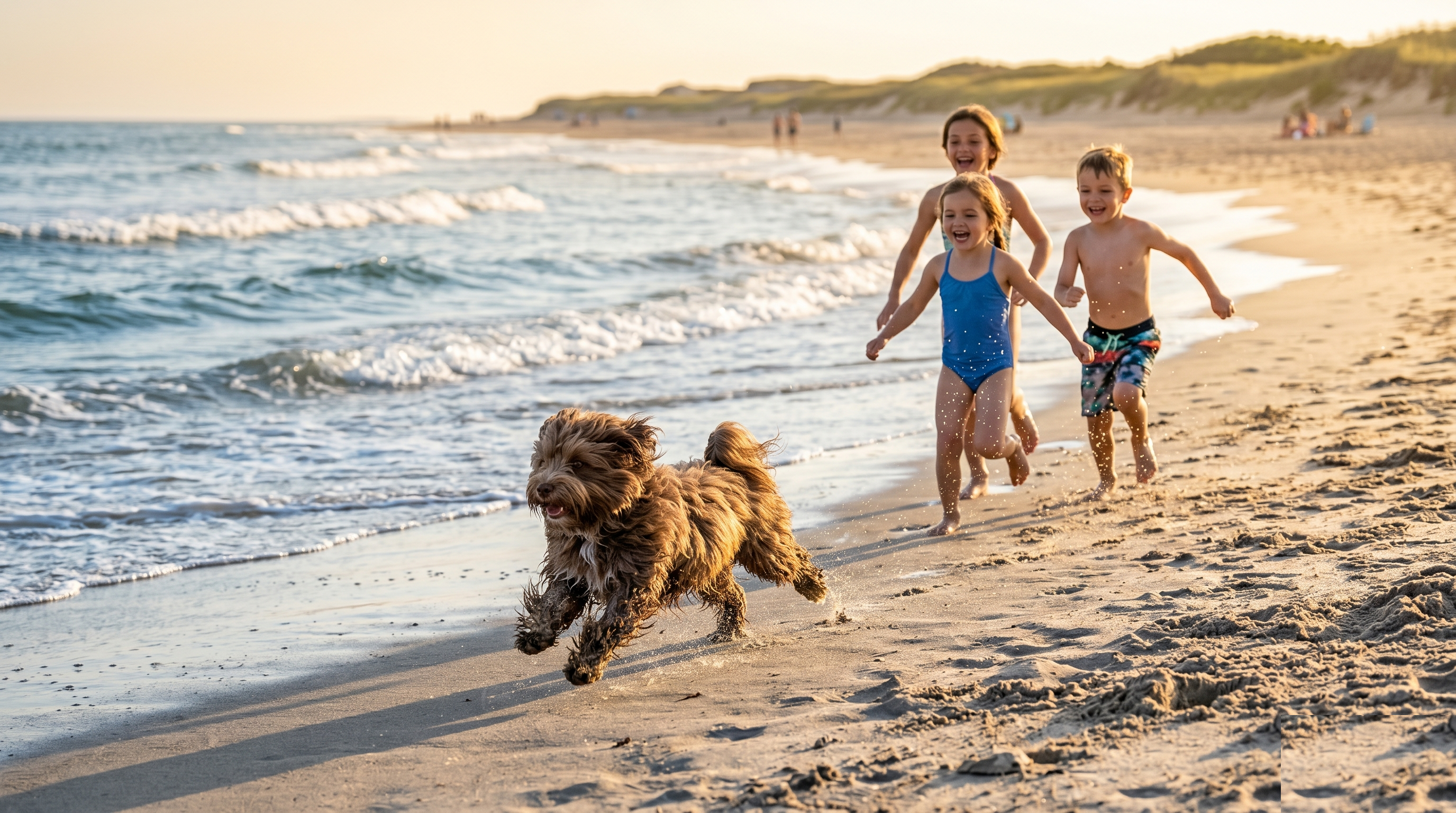
TailTracker models the Havanese as a highly attached, low-independence, human-seeking breed. The breed standard explicitly identifies shyness or sharpness as serious faults. Well-socialized Havanese are usually friendly even with strangers, which becomes operationally important during recovery: a missing Havanese is often willing to approach unfamiliar humans for comfort, which dramatically changes how the dog can be safely contained by neighbors and volunteers.
Living With This Breed
Havanese do best in homes where someone is present for most of the day. The breed's intense human attachment is its defining feature — and its most common behavioral challenge. Havanese left alone for long stretches are prone to separation distress, excessive barking, and destructive attention-seeking behavior. They thrive in work-from-home households, multi-generational families, or homes where the dog can accompany its person through errands and daily routines.
The coat is a real, ongoing commitment. A Havanese kept in full show coat requires daily brushing and professional grooming every four to six weeks to prevent matting. Many pet owners opt for a shorter "puppy cut," which dramatically reduces grooming burden while still requiring consistent care. The coat's light structure means mats develop faster than owners often expect.
- Thrives on close household integration; does poorly when emotionally isolated.
- Needs moderate daily exercise — surprisingly athletic for a small breed.
- Highly trainable with positive, consistent methods; sensitive to harsh correction.
- Significant grooming commitment, particularly in full coat.
- Generally excellent with children, other dogs, and cats when properly socialized.
- Coat protects from heat, not cold — needs weather protection in winter conditions.
Grooming and Health
The Havanese is generally a long-lived and healthy breed relative to its size. A 2024 UK longevity study found an average life expectancy of 14.5 years for the Havanese — noticeably above the purebred average of 12.7 years — reflecting both the breed's small size and its relatively robust overall health profile.
The breed has several documented hereditary health considerations. Patellar luxation (slipping kneecaps) is common across many small breeds and affects Havanese as well. The Havanese is also predisposed to portosystemic shunt — a liver-related vascular condition — at a rate substantially above the general canine population. A University of California-Davis study of over 90,000 dogs found that 4.35% of Havanese had the condition, compared to 0.35% of mixed-breed dogs. Other documented risks include cataracts, retinal dysplasia, heart disease, and sebaceous adenitis.
For recovery planning, the most field-relevant health variables are joint stability (a Havanese with patellar luxation may move unevenly or lie down to rest more often than an owner expects) and cold tolerance. The coat that looks so substantial is built for tropical heat, not for rain, snow, or sustained exposure. A Havanese loose on a cold wet night faces genuine temperature risk sooner than many owners assume.
Fun Facts
- Cuba's only native breed: The Havanese is the national dog of Cuba and the only breed formally recognized as originating on the island.
- Descended from 11 dogs: When American breeders began preserving the Havanese in the 1970s, the entire U.S. gene pool consisted of approximately 11 dogs — the foundation from which the modern American population was rebuilt.
- Heat coat, not cold coat: Unlike most double-coated breeds, the Havanese coat was developed to shield against intense tropical sun rather than to insulate from cold. The undercoat is sometimes completely absent in modern dogs.
- The springy gait: The breed standard calls for a distinctive "flashy, lively" movement — a springy, bouncy trot produced by strong rear drive and a slightly shorter upper arm. It is one of the easiest breeds to recognize at a distance by motion alone.
- Working roles beyond companionship: Despite being a toy breed, Havanese are widely used as therapy dogs, assistance dogs, signal dogs for the hearing impaired, and even in specialized detection work including mold and termite tracking.
- Color changers: Many Havanese puppies change color significantly as they mature — a dog that looks almost black as a puppy may become silver or golden in adulthood.
- AKC-recognized relatively recently: Despite a centuries-long history in Cuba, the Havanese was only formally recognized by the American Kennel Club in 1996 — among the more recently added breeds in the U.S. registry.
Famous Examples
- Charles Dickens's "Tim" — Often known as Timber or Timbery (and occasionally "Snittle Timbery," after a character in Nicholas Nickleby), Dickens's Havanese was a gift received during his 1842 American tour. The little dog became Dickens's constant companion, traveled internationally with him, and appears repeatedly in his letters and personal writings across more than a decade.
- Ernest Hemingway's Cuban household — The AKC notes that Hemingway "fell under the Havanese spell" during his approximately 20 years in Cuba. The breed was part of the daily life at his home at Finca Vigía.
- Venus Williams — The seven-time Grand Slam champion has been publicly associated with Havanese ownership.
- Glenn Close — The Academy Award-nominated actor has also been publicly associated with the breed, reflecting the Havanese's strong presence among dog-loving public figures.
TailTracker Recovery Insight
The Havanese fits a proximity-dependent, human-seeking, low-range recovery profile. This is genuinely distinct from any of the working, guarding, tracking, or sporting breeds in the TailTracker database. The core operational truth about a missing Havanese is that the dog is almost never trying to travel anywhere. It has become separated from its person — through an open gate, a delivery driver, a startling noise, a slipped leash — and its instinct is to wait nearby for reconnection, not to cover distance.
The behavioral sequence TailTracker models for this breed is: separation event → short disorientation → shelter-seeking near familiar human activity → passive waiting. The initial movement is typically limited. A Havanese may cover a few blocks at most before stopping, and the stopping point is usually somewhere that smells or feels like human presence — a porch, a garage, a back yard, a doorway, the area under a parked car.
Stranger approachability is also operationally critical. Because the breed standard explicitly selects against shyness, a well-socialized Havanese is often willing to approach unfamiliar humans for comfort. The practical implication: a missing Havanese is unusually likely to be picked up by a neighbor, a walker, or a delivery person, rather than continuing to wander. Door-to-door canvassing, quickly distributed local flyers, and immediate social media circulation in the surrounding blocks typically outperform wide-radius search efforts for this breed.
If This Breed Goes Missing
Search tight, search fast, and search for human-adjacent shelter spaces. The first 30 minutes of neighborhood canvassing usually matter more than the next three hours of expanding perimeter for this breed.
- Start with the immediate block. Check porches, under decks, inside open garages, behind sheds, under parked cars, and in shrubbery along property lines. This is where a small, people-oriented dog waits.
- Knock on doors early. Neighbors are disproportionately likely to have already seen or contained a missing Havanese. Door-to-door within a few blocks in the first hour is the single most productive recovery activity for this breed.
- Use scent anchoring. Place owner-worn clothing, the dog's bedding, or a familiar crate near the point last seen. For a proximity-dependent breed, scent cues are especially effective.
- Approach calmly and low. A startled Havanese may bolt even from familiar people. Crouch down, use a soft voice, and avoid running toward the dog. This breed responds much better to being invited than chased.
- Distribute flyers to groomers, vets, and local pet businesses. A picked-up Havanese is very often delivered to exactly these places, either directly or via social media.
- Check indoor spaces neighbors might not think to check. Open sheds, unlocked garages, mudrooms, and screened porches are common passive-shelter sites for a small dog that wandered in and is now waiting.
- Consider weather protection. The long coat looks substantial but is designed for tropical heat. A Havanese loose in cold, wet, or freezing conditions is at real temperature risk within hours, not days.
Once sighted, stationary containment almost always outperforms pursuit. A Havanese that recognizes its person will usually come to them if approached calmly. A Havanese chased by strangers may bolt into the street — a serious safety risk for a 10-pound dog. Calm, quiet, low-pressure capture wins almost every time with this breed.
Frequently Asked Questions
Why is the Havanese called a "velcro dog"?
The nickname reflects the breed's intense tendency to stay physically close to its people — following from room to room, settling as near as possible to family members, and generally maintaining close proximity throughout the day. The behavior is consistent enough to appear in virtually every breed description.
How far can a Havanese travel when lost?
Usually not far. The breed's proximity-dependent psychology combined with its small physical size means most missing Havanese stay within a tight radius of the point last seen. Intensive local search almost always outperforms wide-perimeter coverage for this breed.
Are Havanese actually from Cuba?
Yes. The AKC formally recognizes Cuba as the country of origin, though the ancestors of the breed — bichon-type dogs descended from the Bichón Tenerife — arrived in Cuba via Spanish settlers from the Canary Islands. The FCI officially cites the Western Mediterranean region as the origin of the broader bichon family, but the Havanese as a distinct breed was developed in Cuba over roughly three centuries.
Is the Havanese hypoallergenic?
The Havanese is often described as hypoallergenic because of its low-shedding coat. However, as with other so-called hypoallergenic breeds, allergy research has generally not found clear evidence of reduced allergens across breeds. Individual variation is usually more important than breed.
What is the biggest recovery mistake with a Havanese?
Searching too wide, too fast. Because a missing Havanese is usually nearby, sheltered, and waiting, driving expanding perimeters by car can miss the dog entirely. Door-to-door neighborhood canvassing on foot in the first hour is almost always the highest-yield approach.
Related Breed Guides
Comparing recovery behavior across other small companion breeds and bichon-family relatives can help refine search expectations.
Build a breed-informed recovery plan before your dog ever goes missing.
TailTracker helps pet families prepare smarter with breed-aware recovery guidance, coordinated alerts, and a faster path from panic to action.
Most lost-pet tools broadcast alerts.
TailTracker coordinates the recovery.