Great Pyrenees
Breed Guide
Majestic, independent, and deeply rooted in mountain guardian history, the Great Pyrenees is a breed that was built to think for itself. Calm at home yet highly aware of territory, this giant white livestock guardian often behaves very differently when lost than a typical companion breed. A missing Pyr may not feel “lost” at all — it may feel like it is on patrol.
5 min read · Practical pet-owner education with recovery-focused guidance
Overview
The Great Pyrenees is one of the classic livestock guardian breeds of Europe, developed in the mountain country between France and Spain to protect sheep from wolves and bears. Known in France as the Pyrenean Mountain Dog and often affectionately called the Patou, the breed is defined by quiet authority, independence, and a strong instinct to monitor space rather than wait for instructions.
At home, Great Pyrenees are often gentle, affectionate, and surprisingly soft with their family. Yet under that calm exterior is a dog shaped by thousands of years of unsupervised decision-making in open country. That combination matters enormously in recovery planning. A missing Pyr does not usually behave like a frightened little companion dog looking for help. More often, it behaves like a self-appointed guardian moving through territory, assessing the world on its own terms.
TailTracker views the Great Pyrenees as a breed whose lost-dog profile is shaped by four interacting forces: a large working radius, strong territory awareness, increased activity during lower-light hours, and a tendency to assess humans before deciding whether to approach. Those traits can make the breed feel both visible and strangely difficult to recover once loose.
Breed History
The Great Pyrenees has deep roots in the mountain shepherding traditions of the Pyrenees, where large white guardian dogs stayed with flocks and defended them from major predators. Over time, the breed became closely identified with the French side of the range, though similar guardian types existed throughout the region.
In the seventeenth century, these dogs reached the French court and became fashionable guardians of estates and châteaux. Their striking appearance and dignified bearing helped earn them status beyond the mountain pastures, but their true identity remained practical: they were serious working guardians expected to stay calm, think independently, and stand their ground when needed.
The breed later spread to North America, where it became both a show-ring favorite and a working flock protector in rural settings. Even today, the Great Pyrenees is at its most authentic when viewed not merely as a giant white pet, but as a mountain sentinel with a long memory of open land, nighttime vigilance, and responsibility for a perimeter larger than a fenced yard.
Physical Characteristics
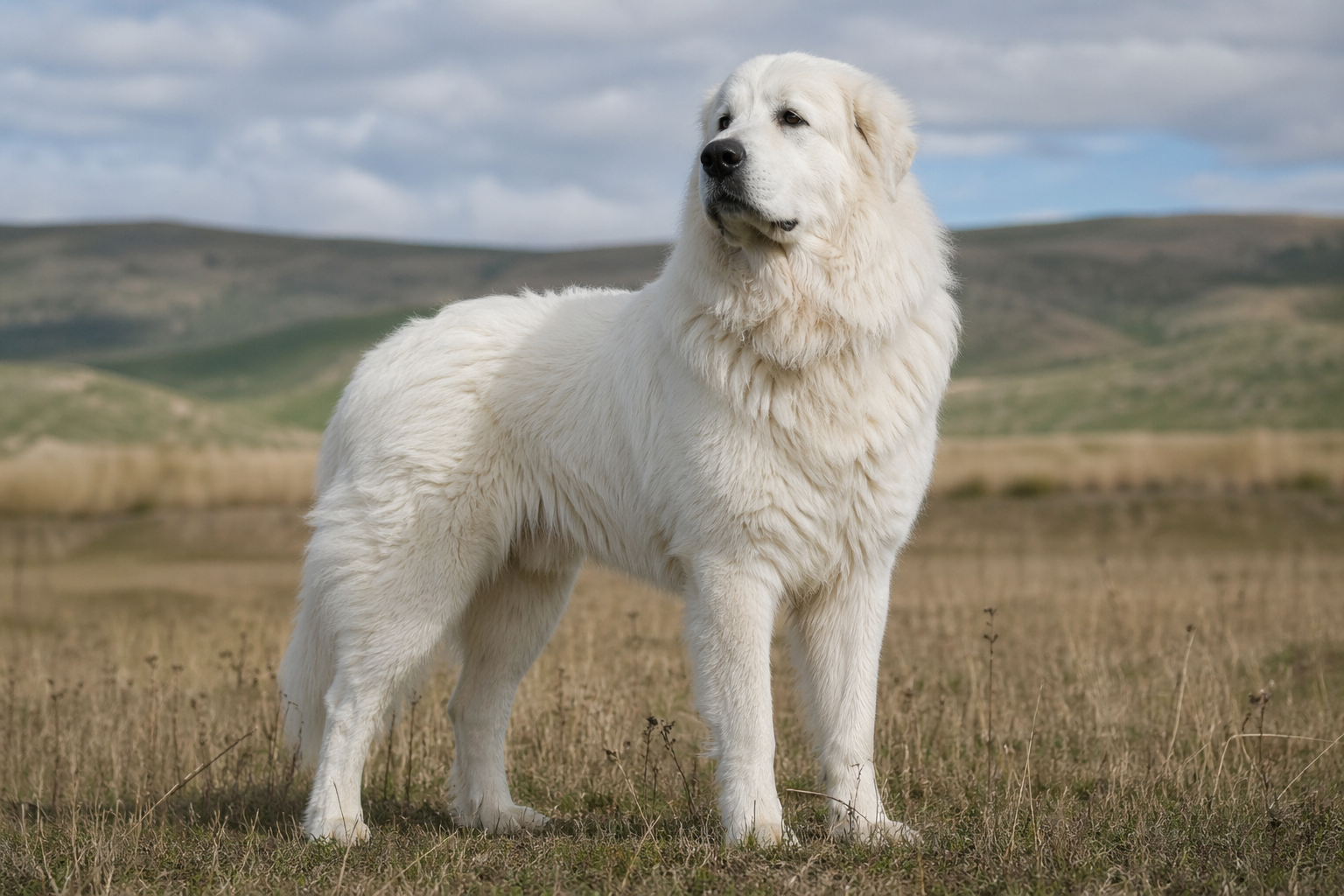
The Great Pyrenees is a large, heavily coated mountain guardian with a powerful frame and a distinctly calm presence. The breed should look substantial without losing balance or functional athleticism. Its long double coat protects it from harsh weather, while the predominantly white coloration historically helped the dog blend visually with the sheep it guarded.
One of the breed’s signature features is the presence of rear double dewclaws, a traditional hallmark that reflects the breed’s mountain-working heritage. Great Pyrenees also carry themselves differently from many giant breeds: less dramatic than a mastiff, less flashy than a giant show dog, and more like a slow, self-possessed athlete built for terrain, weather, and endurance of purpose.
Owners often describe the coat as surprisingly practical. Though thick and white, it tends to shed dried dirt well and functions more like weather gear than ornamental fluff. That practicality mirrors the entire breed.
Temperament
The Great Pyrenees is calm, observant, independent, and deeply serious about its environment. With family, many are affectionate and quietly devoted. With strangers, they are often polite but measured. This is not usually a breed that gives away trust automatically. It prefers to evaluate first.
Their intelligence is often misunderstood because it does not look like eager obedience. Great Pyrenees were bred to work away from human hands, often in darkness, cold, and difficult terrain. As a result, they tend to think in terms of responsibility and judgment rather than performance. They can be wonderfully gentle companions, but they are rarely clingy in the style of a retriever or spaniel. Instead, they feel like dignified partners who believe they have a role in keeping the household safe.
Many owners also notice the breed’s nighttime alertness. A Pyr that spends the day resting can become far more vigilant at dusk and overnight, reflecting the hours when predators traditionally moved. This nocturnal guardian bias becomes highly relevant in missing-dog situations.
Living With This Breed
Living with a Great Pyrenees means living with a dog that notices boundaries, patrol opportunities, and shifts in the environment. Many choose favorite lookout spots in the yard, sleep lightly, and check the property line with the seriousness of a night watchman.
They usually do best with calm, confident leadership and an owner who respects the breed’s independence without mistaking it for stubbornness alone. Great Pyrenees are often wonderful family dogs, but they are not casual dogs. They carry a guardian mindset into ordinary life, and that means they benefit from secure containment, consistent routines, thoughtful socialization, and realistic expectations about barking, perimeter awareness, and nighttime alerting.
- Often most alert at dawn, dusk, and overnight.
- Usually prefers monitoring and patrolling over constant play.
- Benefits from secure fencing and careful gate discipline.
- Independent judgment can be an asset at home and a challenge when loose.
- Typically forms deep family bonds but may assess unfamiliar people carefully.
- Can become highly invested in its idea of territory, flock, or responsibility.
Grooming and Health
The Great Pyrenees has a thick, weatherproof double coat that needs regular brushing, especially during seasonal shedding. Grooming is less about creating a polished show finish and more about keeping the skin healthy, preventing mats, and preserving the coat’s functional structure.
As a giant breed, the Great Pyrenees also benefits from thoughtful joint support, weight management, and conditioning that preserves mobility without stressing the frame. Sound structure matters greatly over time. Like many large and giant breeds, the Pyr is best served by steady care rather than extremes.
For recovery planning, the most field-relevant physical considerations are endurance, coat protection, and size. A Great Pyrenees can cover meaningful ground when motivated, tolerate weather better than many breeds, and remain comfortable outdoors longer than owners may realize — all of which can influence search strategy if the dog stays loose for multiple days.
Fun Facts
- Royal recognition: The breed became associated with the French court and was once celebrated as the Royal Dog of France.
- Rear double dewclaws: A hallmark of the breed and part of its traditional mountain-working identity.
- The “Pyr Paw”: Many owners know the breed’s distinctive habit of using a front paw to get attention or hold onto a person.
- Mountain camouflage: The white coat once helped the dog blend with the flock it protected.
- Working heritage intact: Unlike some breeds whose original function is mostly symbolic today, Great Pyrenees still actively guard livestock in many regions.
Famous Examples
- Belle from Belle and Sebastian: One of the best-known Great Pyrenees in popular culture, embodying the breed’s loyalty, gentleness, and independent spirit.
- Estate and château guardians: Historically admired not just by shepherds but by nobles who valued the breed’s protective presence.
- Modern livestock guardians: Across Europe and North America, the breed still serves in its original role protecting flocks against predators.
TailTracker Recovery Insight
The Great Pyrenees fits a very different recovery pattern from a typical companion breed. This is not usually a close-range, shelter-seeking, human-dependent search profile. Instead, the breed often behaves like a guardian released from containment: widening its world, moving with purpose, and choosing its own perimeter.
TailTracker models the Great Pyrenees lost-dog sequence as trigger → purposeful travel → perimeter selection → low-light movement / daytime concealment. That sequence can create the impression that the dog has vanished, when in reality it has entered a working-logic mode rooted in territory rather than reunion.
This is the logic behind the well-known “Pyr disappear.” A loose Great Pyrenees may not keep checking back toward home the way a strongly handler-dependent breed often does. Instead, it may adopt a field edge, trail corridor, livestock property, park, or rural lane as a new area worth monitoring.
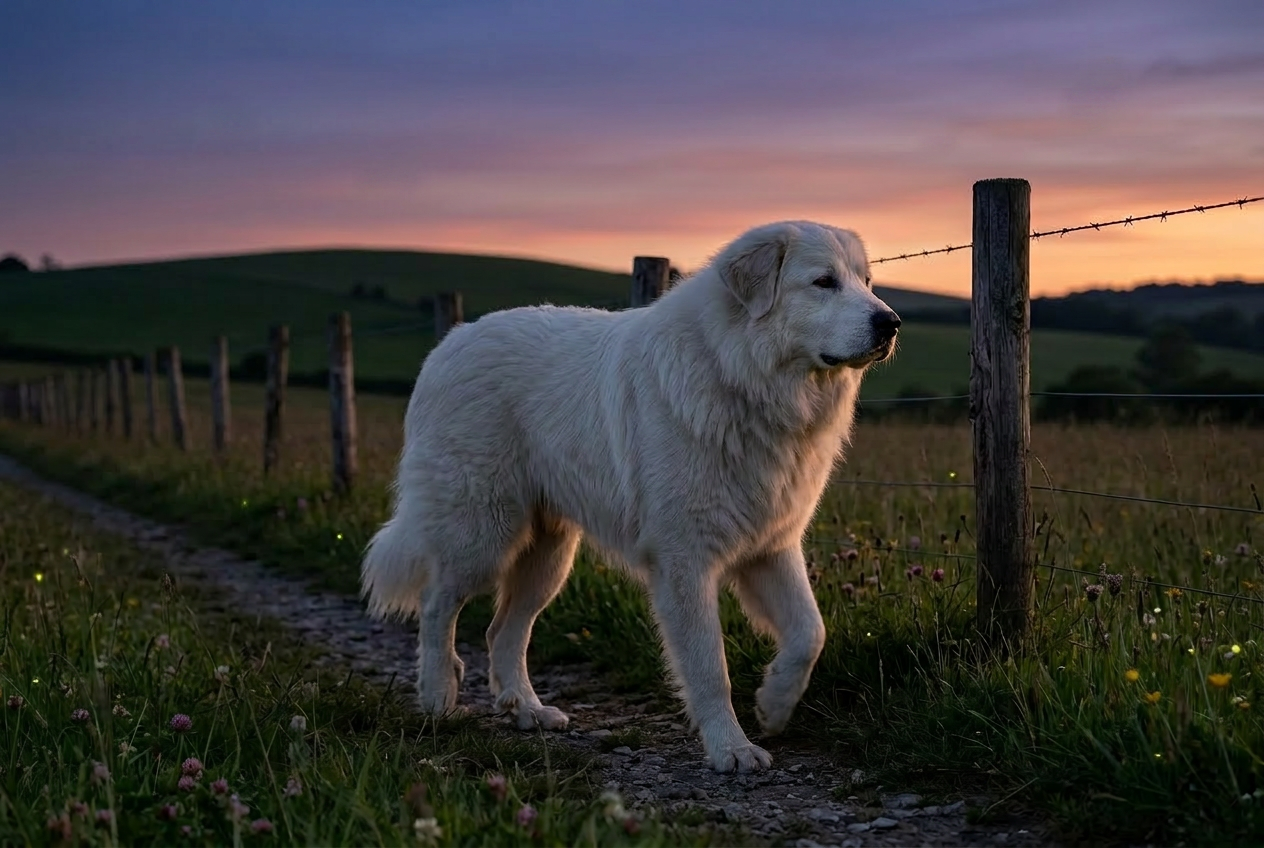
The breed’s nocturnal bias matters too. Many missing Great Pyrenees lie low during the day and become more mobile in lower-light hours. A Pyr may spend daylight hidden in shade, brush, behind structures, or along a field edge, then travel again at dusk or overnight when the environment feels more natural to patrol.
Human approach strategy is equally important. Even a friendly Pyr may not walk directly to strangers, and some will hesitate with familiar people if overstimulated or in guard mode. Pressure, chasing, loud calling, and direct pursuit can widen the problem.
If This Breed Goes Missing
Start with a broader search mindset than you would use for a typical family companion breed. A Great Pyrenees can cover meaningful ground, especially where open land, field edges, trails, farm roads, or quiet residential corridors make movement easy.
- Expand the map early. In semi-rural and rural environments, think in miles sooner than you would for a clingy companion breed.
- Prioritize dawn, dusk, and overnight sightings. Reports outside normal daytime windows may be especially revealing.
- Check farms, horse properties, grazing areas, parks, trail systems, and large open yards. These match the breed’s guardian logic.
- Ask neighbors to look for a large white dog that seems settled rather than frantic. A Pyr may appear as though it belongs somewhere it does not.
- Use calm, passive recovery tools. Cameras, food stations, scent items, and humane trap strategy often outperform direct pressure.
- Avoid crowding or chasing. Direct pursuit can turn a manageable guardian hold pattern into a moving perimeter problem.
- Think “new flock.” If livestock, deer, goats, or even a quiet open property are nearby, the dog may decide it has found something worth guarding.
Once sighted, containment matters more than speed. Approach quietly, soften your posture, avoid intense eye contact, and let the dog make a choice if possible. For this breed, calm usually beats urgency.
Frequently Asked Questions
How far can a Great Pyrenees travel when lost?
Often farther than owners expect. Unlike many companion breeds, the Great Pyrenees may continue traveling with purpose, especially in terrain that supports patrolling behavior such as fields, trails, fence lines, or rural roads.
Why does my Great Pyrenees seem more awake at night?
It reflects the breed’s guardian history. Great Pyrenees were bred to be more vigilant during the hours when predators were most active, so nighttime alertness is common and normal for the breed.
Will a lost Great Pyrenees come when called?
Sometimes, but not reliably under stress. Even a loving, well-bonded Pyr may stop to assess rather than run directly back, especially if aroused, guarding space, or unsure of the situation.
Why do people call it the “Pyr disappear”?
Because the breed can seem to vanish into a much wider working radius than expected. A dog that leaves home may quickly adopt a new perimeter and behave like a self-directed guardian instead of a confused missing pet.
What is the biggest recovery mistake with a Great Pyrenees?
Assuming the dog is staying close and behaving like a clingy companion breed. For Great Pyrenees, underestimating range and overusing active pursuit are two of the most common recovery errors.
Related Breed Guides
Comparing Great Pyrenees recovery behavior with other guardian and giant breeds can sharpen search expectations.
Build a breed-informed recovery plan before your dog ever goes missing.
TailTracker helps pet families prepare smarter with breed-aware recovery guidance, coordinated alerts, and a faster path from panic to action.
Most lost-pet tools broadcast alerts.
TailTracker coordinates the recovery.